Internship for English literature students: the roles, where they are and how to get one
Looking for an internship? Apply to Pledge A Smile FoundationShort answer
An internship for English literature students is easiest to find in content work: on 25 September 2026 Internshala's content writing category was headed 1,495 internships, many of them social media roles, against 128 in teaching and 24 in translation. The Ministry of External Affairs and the Central Institute of Indian Languages take interns on narrower terms.
- Updated
- 26 September 2026
- Sources checked
- 25 September 2026
- Read
- 11 min
- Sources
- 15
Which internships are English literature students hired for?
On 25 September 2026 Internshala's content writing category was headed "1495 Intern Jobs in Sep 2026", its teaching category "128 Intern Jobs" and its translation category "24 Intern Jobs". The content writing count was more than eleven times the teaching count that day, though, as the next section shows, many cards filed under content writing are social media and marketing roles.
A university's own programme page points the same way. Dr. B. R. Ambedkar University Delhi's page for its BA Honours in English says its students can take up jobs in "teaching and research oriented projects, publishing, journalism, advertisement, public relations, technical writing, technical editing", film studies, and script and screenplay writing. Those are the fields to aim an internship at.
So for an internship for BA English students, start with the roles where your reading and writing are the skill being bought: content writing, copy editing, research writing, scripts. Teaching and translation come next, each with a condition. Online options across arts subjects are compared in online internships for arts and humanities students.
What does a content writing or editing intern do each day?
They write to a brief and a fixed length, research from named sources and check copy for errors. One card on Internshala's content writing page on 25 September 2026 asked for "500+ word articles" and app descriptions of 4,000 characters, titles of 30 and subtitles of 80. Another asked for "a fixed number of blogs per month".
Research is a large part of it. A card from a careers portal asked interns to update pages on admissions, fees and eligibility using sources "such as AICTE, UGC, NMC, NIRF, official counselling authorities, and university websites". A copy editor's card asked for review of "spelling, grammar, punctuation, syntax, and overall readability".
Read the title with care, because the category is broad. Of the 59 listings on the first page that day, 23 had social media in the title and 10 named writing, copywriting, scriptwriting or copy editing. One was a sales role. The rest ranged from marketing, branding and influencer roles to operations, product listing and requests for donations.
Pay on that page was mostly monthly. 53 of the 59 gave a monthly amount, 28 of them starting at ₹10,000 or more; 3 read "Unpaid" and 3 offered a "lump sum". How a first writing internship is structured is in content writing internships for beginners.
Can you intern in teaching as an English student?
Rarely through listings; the documented way into a classroom is unpaid volunteering in government schools, which is not an internship. None of the 51 first-page titles in Internshala's teaching category on 25 September 2026 named English; the nearest was one IELTS trainer and counsellor role. Eleven were for coding, robotics, drones or AI, and eight were subject-expert roles in chemistry, physics, mathematics, economics, statistics and anatomy, all from one employer.
Six of the 51 read "Unpaid". The teaching category also mixed in learning-and-development jobs, stock market trainers and educational consultants, so filter by what the card asks you to teach, not by the heading.
The Ministry of Education's Vidyanjali portal, which matches volunteers with government schools, lists sample activities that include "Reading/pronunciation for Children", "Helping Children with Creative Writing", public speaking and "Preparing Story Books with Children". A PIB release of 12 February 2026 says more than 5 lakh volunteers and nearly 8.5 lakh schools had joined the platform by then.
The portal calls itself "strictly a volunteer engagement platform" and says it offers no jobs, employment or paid opportunities. How it works is in volunteering in government schools through Vidyanjali, and if you plan to teach for a living, read internships for B.Ed and teaching students first.
Is translation work open to English literature students?
Translation listings are open to English literature students only if they also command a second language. Of the 24 listings in Internshala's translation category on 25 September 2026, 23 asked for a language besides English: Marathi, Tamil, Kannada, Telugu, Gujarati, Malayalam, Bengali, Odia, Punjabi, Japanese in one case and "Indian/regional languages" in another. The remaining card was a subtitling and dubbing role.
A single employer's name appeared on 19 of the 24 cards. 21 of the 24 were work from home. Pay ran from "₹ 1,000 /month" for a transcription role to "₹ 22,000 - 25,000 /month" for voice-over work; one card read "Not provided".
Only one of the 24 titles was simply "Translation"; the rest were for language experts, transcribers, proofreaders, subtitlers, voice-over artists, audio checks, data collection or content. One transcription card asked interns to keep "a word error rate of 3% or lower". If your mother tongue is one of these languages, that is a real opening; if you read only English, translation listings are not written for you.
Some degrees teach the literary side. AUD's BA Honours in English lists a course called Literary Translation in India. A translated poem or story from such a course, with the original beside it, is the kind of sample a publishing application can use.
Can English literature students intern at a publishing house?
Yes, if you find the publisher yourself. The National Book Trust, India, which works under the Ministry of Education, encouraged an optional internship "of at least 30 days at a publishing house" in its 2026 Book Publishing Course, and told participants that "NBT will not be arranging internships", while adding that "A limited number of internships will be available at NBT".
That 2026 course ran offline in New Delhi from 1 June to 10 July, in English, for graduates and postgraduates only, so an undergraduate still in college cannot take it yet. Intake was limited to 30, and the fee was Rs. 15,000 plus 18% GST, Rs. 17,700 in all.
University departments place English students in publishing-side work too. The internship manual of SNDT Women's University's Department of English in Mumbai, written for 2014-16, records interns developing and copy editing content at newspapers, translating from Marathi into English for a university research project, and doing research at a heritage conservation society, with other interns placed in the performing arts.
When you write to a publisher directly, send an edited page rather than a claim that you edit well: a page of copy with your changes tracked, or a short reader's report on a manuscript you have read.
Which government internships can English literature students apply for?
Two national bodies publish terms that make a government internship for English literature students possible: the Ministry of External Affairs (MEA) and the Central Institute of Indian Languages (CIIL), which works under the Ministry of Education. Both are narrow. MEA takes at most 30 interns a term and caps age at 25; CIIL takes requests only from a student's department.
The MEA internship portal splits the year into two six-month terms (April to September, then October to March), and each intern stays for one to three months of a term. "A maximum of 30 interns" are taken per term. The portal's home page, checked on 25 September 2026, states an honorarium of ₹10,000 a month for each intern and the cost of one return air journey to Delhi, capped at the economy fare from the state capital; interns pay their own board and lodging.
Interns research, write reports and analyse developments for their division head, and submit a detailed report at the end.
Selection follows a state quota, so your state decides your term. The April to September term covers 14 states including Bihar, Karnataka, Kerala and Maharashtra, with Delhi among its four union territories. The October to March term covers Odisha, Punjab, Rajasthan, Tamil Nadu, Telangana, Uttar Pradesh, Uttarakhand, West Bengal, the north-eastern states other than Assam and Arunachal Pradesh, and four more union territories.
Merit lists go by marks in class 12 and graduation, and interviews are by video. The most recent notice listed on the portal, for 2026 Term II, is dated 10 September 2026; read the timeline there rather than assuming dates.
CIIL's internship guidelines take interns only through their department: requests must reach CIIL at least 4 weeks before the start, and "Only five interns per institution are permitted in a batch". Interns get "a completion certificate based on their performance" and are expected to manage their own travel. The guidelines set no stipend, though the Institute "may consider incentives" case by case.
Beyond those two, the AICTE National Internship Portal describes itself as serving "AICTE, UGC, IGNOU and other students". On 25 September 2026 its home page listed an open track from the Bharatiya Bhasha Samiti, a Ministry of Education body for Indian languages, whose interns "work on translation, technical terminology and language-technology projects". Like the translation listings, it suits a student who works in a second Indian language.
Other ministries' programmes are in government internship portals beyond AICTE, and the routes open to neighbouring subjects are in the guides for political science students and economics students.
Does a BA English honours course require an internship?
Yes, under the University Grants Commission's framework, a short one. The UGC's 2023 guidelines make a 60 to 120 hour internship, taken after the fourth semester, compulsory for students enrolled in undergraduate degree programmes, and say that 2 to 4 credits of the minimum 120 or 160 can be assigned to it.
How your university applies that is its own decision, so check your programme's regulations. AUD's BA Honours in English, for example, asks for "a 6-credit internship (2 months)" and a 4-credit VBE course whether a student leaves with a certificate after one year, a diploma after two or the bachelor's degree after three.
A few universities now build the work into the degree itself. Aligarh Muslim University's online BA English with Apprenticeship lists its mode as "Online + On-the-job Training" and charges an apprenticeship fee of ₹5,000 in each of its three years, within total fees of ₹40,800.
For an internship for English honours students, the practical question is whether the department will count the work you find. Ask before you start, in writing, and ask whether an online internship qualifies; the rules on that are set out in whether online internships earn UGC credit.
What changes for MA English students?
For MA English students, the age cap and the credit rules change. An MA student already holds a graduate degree, the Ministry of External Affairs' basic qualification, but its age cap rules out anyone older than 25 on 31 December of the internship year. The UGC's 60 to 120 hour rule is written for undergraduate programmes, so MA credit depends on the university's own syllabus.
Some MA programmes write the internship into the syllabus. SNDT Women's University's Department of English, which teaches the MA in English, described its internship in the 2014-16 manual as "an 8-credit course" of 240 clock hours, counted at 30 hours per credit, with at least 30 hours a week on site. That manual asked students to apply to the head of department at the beginning of Semester IV; check the current syllabus for today's terms.
The department also matters more at some hosts. CIIL, for example, takes requests from a "department or centre, or the school" and discourages students writing in directly, so an MA student interested in language work should ask the department to send the request.
For writing roles, an MA helps most when you can show it: a published review, an edited anthology, a research essay. When you apply for an internship for MA English students, send two such samples with the application. An MA student weighing a move into social work can compare online options for MSW students.
How do the routes compare for an English literature student?
Compare the routes on five points: whether the route pays, whether it can count for credit, whether it leaves you with a publishable writing sample, whether it builds subject-specific technical skills, and whether you can confirm who runs it. Six routes are open.
- Content writing listings on platforms. Most first-page cards paid a monthly amount on the day checked, and the work can produce bylines or live pages you can show. The skills are SEO, briefs and editing. You must check each employer yourself, and credit depends on your department.
- Teaching listings and school volunteering. No first-page teaching title named English on the day checked; Vidyanjali offers reading and creative writing sessions in government schools, unpaid, on an official portal that is easy to check. It builds classroom experience but no written sample, and the portal offers no paid work.
- Translation listings. They pay monthly and are mostly remote, but nearly all need a second language, and the work is transcription and proofreading more than literary translation. Ask whether you may show the work before you count on it as a sample. Credit is up to the department.
- Government programmes such as MEA and CIIL. They are easy to verify on official sites and end in a certificate; MEA pays an honorarium, CIIL sets none. They are narrow: an age cap, a state quota and 30 seats a term at MEA; a department request and five interns per institution per batch at CIIL.
- A department-arranged internship. It is built for credit, because the department approves the host, which makes it the default internship for English hons students who need the credit. Pay and writing samples depend on the host it finds. Ask early in the fourth semester if the 60 to 120 hour rule applies to you.
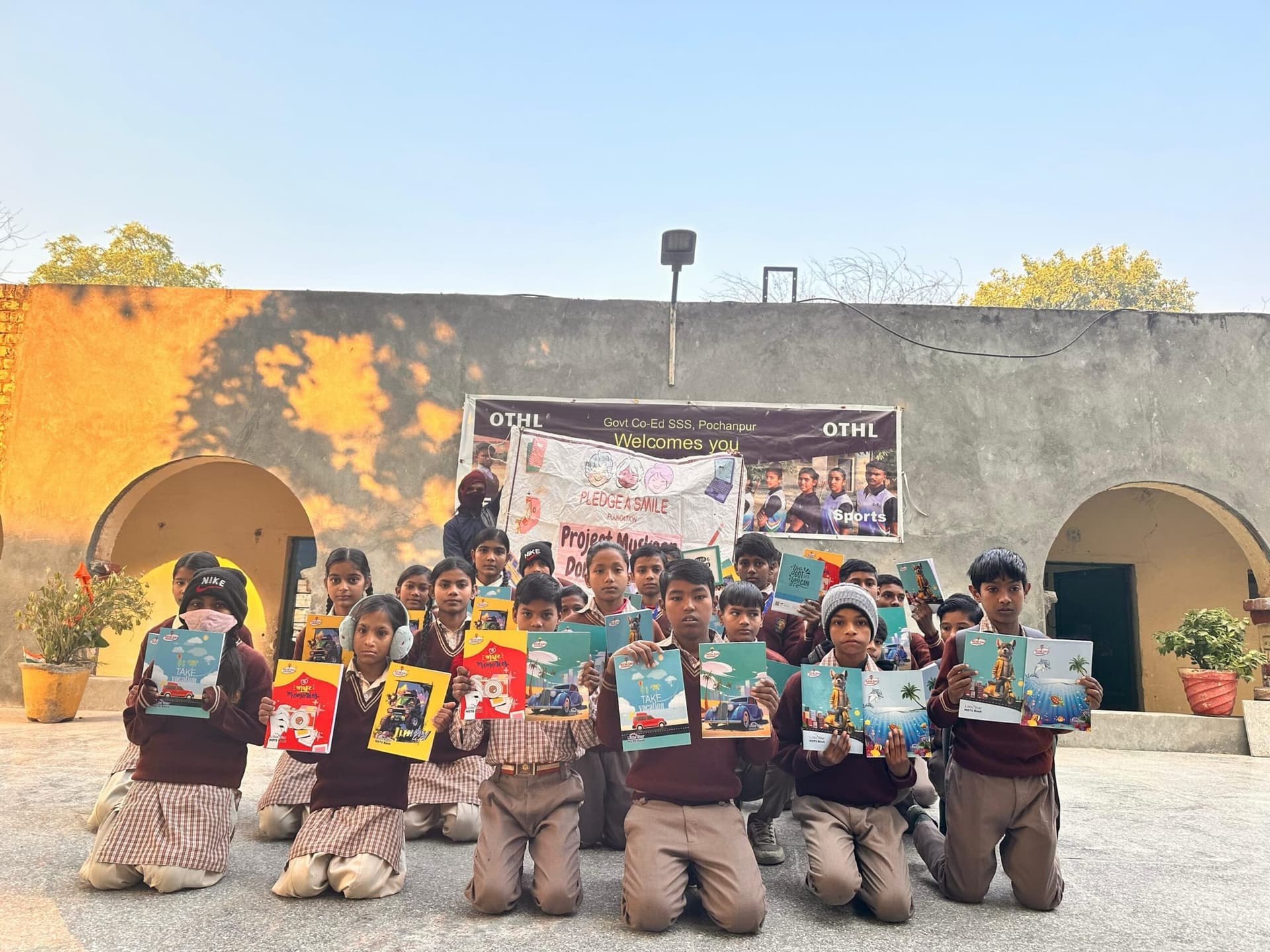
- A non-profit's own programme, open to direct applications. Pledge A Smile Foundation (the publisher of this guide) runs an online internship that is open to students of any stream and free to apply to and to do. Interns own a weekly target, send a weekly report and get feedback on it. There is a performance-based stipend and a certificate on completion. It does not teach subject-specific technical skills.
A student who needs a portfolio should lead with content writing; one who needs credit, with the department; one who speaks a second language well, with translation.
- 1On 25 September 2026 Internshala's content writing category was headed 1,495 internships, its teaching category 128 and its translation category 24.
- 2Of the 24 translation listings on 25 September 2026, 23 asked for a language besides English, and 19 came from one employer.
- 3The Ministry of External Affairs (MEA) takes up to 30 interns a term, each for one to three months, with an age limit of 25 as on 31 December; its portal states an honorarium of ₹10,000 a month, and your state decides which of its two terms you can apply for.
- 4The Central Institute of Indian Languages (CIIL) accepts internship requests only through the student's department, at least 4 weeks ahead, and permits five interns per institution in a batch.
- 5The University Grants Commission's 2023 guidelines make an internship of 60 to 120 hours after the fourth semester mandatory for students enrolled in undergraduate degree programmes.
Can a final-year BA English student apply for the MEA internship?
Only where an internship is a mandatory part of the final-year curriculum. Otherwise the Ministry of External Affairs (MEA) asks for a graduate degree from a recognised university at the time of applying. Applicants must be Indian citizens and not older than 25 years as on 31 December of the year of the internship.
When must the NBT book publishing course internship be finished?
By 31 August 2026 for the 2026 batch. The National Book Trust, India's terms for its Book Publishing Course encouraged an optional internship of at least 30 days at a publishing house and set that completion date. Participants were expected to contact publishing companies themselves, and NBT said only a limited number of internships would be available with it.
What does a department need to send CIIL for an internship request?
Each intern's official name, enrolment number, academic session, programme or course name, contact number and postal address, and whether the internship carries academic credit. The Central Institute of Indian Languages takes requests only from the student's department, centre or school, and they must reach it at least 4 weeks before the internship starts.
Is there a work-from-home content writing internship for English students?
Yes. Internshala's work-from-home content writing page was headed "488 Intern Jobs in Sep 2026" on 25 September 2026. On the main content writing page the same day, 9 of the 59 first-page listings were work from home. Counts on a listing board change daily, so treat them as a dated snapshot.
Do women get any preference in the MEA internship selection?
The MEA portal says a minimum of 30% of places may be filled by women candidates, and it prepares state-wise merit lists separately for men and women. It also gives priority to applicants from TADP districts at the screening stage and to SC, ST, OBC and EWS applicants at the interview stage.
Every rule above links to the document that states it. The full list, with the date each was last opened:
- 1Internshala, Content Writing Internshipsinternshala.com · checked 25 September 2026
- 2Internshala, Teaching Internshipsinternshala.com · checked 25 September 2026
- 3Internshala, Translation Internshipsinternshala.com · checked 25 September 2026
- 4Dr. B. R. Ambedkar University Delhi, BA Honours in Englishaud.delhi.gov.in · checked 25 September 2026
- 5Vidyanjali (Ministry of Education), FAQsvidyanjali.education.gov.in · checked 25 September 2026
- 6Press Information Bureau (Ministry of Education)pib.gov.in · checked 25 September 2026
- 7Vidyanjali (Ministry of Education), How to participatevidyanjali.education.gov.in · checked 25 September 2026
- 8Ministry of External Affairs, Internship Portalinternship.mea.gov.in · checked 25 September 2026
- 9Central Institute of Indian Languages, Guidelines for internshipciil.org · checked 25 September 2026
- 10University Grants Commission, Guidelines for Internship/Research Internship for Under Graduate Students (2023), p9ugc.gov.in · checked 25 September 2026
- 11Internshala, Work from home content writing internshipsinternshala.com · checked 25 September 2026
- 12National Book Trust, India (Ministry of Education)nbtindia.gov.in · checked 25 September 2026
- 13SNDT Women's University, Department of Englishsndt.ac.in · checked 25 September 2026
- 14Aligarh Muslim University (AMU Online)amuonline.in · checked 25 September 2026
- 15AICTE National Internship Portal, home pageinternship.aicte-india.org · checked 25 September 2026
Pledge A Smile Foundation takes interns from anywhere in India.
A registered Section 8 non-profit. The programme is remote, open to students with no prior experience, and free to apply to.
See the internship and how to applyMore from by course
By courseOnline internships for arts and humanities studentsArts is India's largest undergraduate stream by enrolment, and no rule turns that into an internship for you. Here is what a literature, history, political science, fine arts, economics or sociology background can realistically do in a remote internship, and how it changes what an employer sees.8 min read · 7 sourced claims By roleContent writing internship for beginners: the work and how to get oneA content writing internship is research, a draft to a brief and a round of edits before anything goes live. Here is what the work involves, what remote listings paid on one dated day, and how a beginner with no published work gets a first one.11 min read · 37 sourced claims
 Finding onlineGovernment internship portals beyond AICTE: what NHRC, WCD and NCW publishFour official routes run on four different sets of rules, and each body publishes its own terms on its own page. This guide sets out what each one asks for, which streams it accepts, what it pays and when the next window opens.9 min read · 16 sourced claims