Online internship for MSW students: options beyond fieldwork
Looking for an internship? Apply to Pledge A Smile FoundationShort answer
An online internship for MSW students is extra to fieldwork unless the department agrees in writing, since universities such as Bengaluru City University allot fieldwork agencies. Online routes are mainly remote listings (27 of the first 50 unpaid on Internshala's social work page on 25 September 2026), UN Volunteers tasks of up to 12 weeks, and non-profit programmes.
- Updated
- 26 September 2026
- Sources checked
- 26 September 2026
- Read
- 11 min
- Sources
- 12
Which routes are open to an MSW student beyond department fieldwork?
Four routes sit outside department fieldwork: government internships such as the Ministry of Women and Child Development's two-month batch of up to 20 interns, remote listings (on 25 September 2026 Internshala's first page showed 50 remote social work roles), United Nations Volunteers online tasks of no more than 12 weeks, and a non-profit's own online programme.
None of them is fieldwork. In the syllabi read for this guide, the department places you: Bengaluru City University (BCU) sends MSW students to "agencies allotted by the department/college", and the University of Delhi (DU), in the MA Social Work scheme it applies to batches admitted since 2018-19, ties field attendance to work "scheduled by Field Work Unit". Whatever you add sits beside that practicum.
Only one government internship found for this guide runs online, a two-week human rights programme set out below, so most online choices are the listings, UN tasks and a non-profit's programme. If you are still an undergraduate, the routes for you are in social work internships for undergraduates.
How many hours does MSW fieldwork take, and does online work count toward it?
At Bengaluru City University (BCU), whose MSW syllabus took effect in 2025-26, fieldwork runs two days a week and a minimum of 15 hours weekly, with 75% attendance. Block placement of 30 working days or more comes on top. Neither the BCU syllabus nor the University of Delhi's MA Social Work syllabus mentions online fieldwork, so treat online work as extra unless your department says in writing that it counts.
BCU spells out the visits. The first semester needs at least 24, the second at least 18 days of concurrent fieldwork plus a Social Work Camp of 5 to 7 days, and the third and fourth at least 25 concurrent visits each. Miss the attendance line in any semester and you repeat the practicum after the course ends.
MSW internship hours and requirements are set as fieldwork in both syllabi, but the unit differs: BCU counts hours a week, DU counts marks and days. Of the 3,000 marks in DU's MA Social Work, for batches admitted from 2018-19 onward, field practicum carries 900. The syllabus calls this the 34% minimum weightage for fieldwork that the UGC prescribes.
DU's block placement falls in the summer between 1 May and 15 July, for at least 30 days after the second semester. The 900 is a count of marks; the syllabus gives no total of field hours.
DU is stricter on attendance, at 90 percent "strictly" for field work. The same syllabus bars its students from "part-time or any job" while the course runs. Ask the department whether it treats an online internship as that kind of work before you sign up. The hour rules at other universities are in the full hour counts by university, and the rules on hosts in which agencies qualify.
What should you compare before choosing a route?
Six points decide it: whether the work earns fieldwork credit, whether it pays, who supervises you, whether it builds casework and community skills, whether it is online or in person, and whether it fits around your fieldwork days. Weigh them in that order, because the BCU and University of Delhi syllabi both attach a fixed penalty to missed field attendance.
Credit comes first because the syllabus makes it binding. At DU a student below 90 percent field attendance cannot sit the viva; at BCU a shortfall means repeating the practicum. Pay and place come next, and in the sources for this guide they pull against each other: the highest stipend stated by any government route found here, WCD's, is for a batch in Delhi, in person.
Supervision is built into fieldwork: BCU's syllabus has faculty supervisors visit each agency regularly. Ask any extra host who will play that part for you, how often they will read your reports, and get the answer in writing before you accept.
Which government internships take MSW students?
Government bodies that publish internship schemes an MSW student can look at include the Ministry of Women and Child Development (WCD), the Department of Social Justice and Empowerment, the National Institute of Social Defence (NISD), the Delhi Commission for Protection of Child Rights (DCPCR) and NITI Aayog. NISD names social work first among preferred backgrounds; WCD takes only women aged 21 to 40 from outside Tier-I cities.
WCD's internship guidelines cover women who are students, scholars, social activists or teachers, from rural areas or from cities outside Tier-I, and who are enrolled in or linked to some institution. The batch is two months long and takes up to 20 interns.
The WCD internship portal names eight Tier-I cities: Bengaluru, Delhi, Mumbai, Chennai, Kolkata, Hyderabad, Pune and Ahmedabad. The page rules out any candidate who belongs to one of the eight. A woman MSW student from Lucknow or Guwahati who meets the age rule can apply; one who belongs to Pune cannot.
The stipend is a lump sum, "Rs. 20,000/- per month" in the guidelines' words. Fares to Delhi and home again are reimbursed at deluxe bus, AC bus or 3-tier AC train class, and interns get a shared hostel room in Delhi, paying their own mess charges. Interns may be asked to run pilot projects or micro-studies of what the Ministry is currently doing. The certificate depends on submitting or presenting papers or reports.
The portal's About the Scheme page sets four two-month terms a year: May-June, August-September, November-December and February-March. You apply between the 1st and 10th of the month two months before your term, so 1 to 10 March for May-June. Anyone selected once cannot apply for a later term. The guidelines PDF carries no date, so go by the portal.
A government internship for MSW students can also come from the Department of Social Justice and Empowerment. Its internship scheme for UG, PG and research students pays "Rs. 10,000/- per month" for up to six months, the whole sum paid once the internship ends, and reimburses no travel. Interns present a brief report or paper at the end and receive a certificate.
Social work is not in that scheme's list, which names sociology, anthropology, political science, public administration, law and education, then "allied/humanities fields", so ask the Department whether it treats social work as an allied field before you apply. Applications go on plain paper only in response to an advertisement or circular from the Department, backed by a recommendation letter signed by your head of department, principal or supervisor. The scanned PDF carries no date.
The NISD Internship Scheme, run by the National Institute of Social Defence under the Ministry of Social Justice and Empowerment, names social work first among the backgrounds it prefers. It is unpaid, lasts four weeks to three months in office hours of 9.30 a.m. to 6 p.m., and covers senior citizens care, drug abuse prevention and other social defence issues. You need 50% or more cumulative marks in every year so far, and at least 80% attendance during the internship, or NISD issues no experience certificate.
NISD takes applications online up to the 25th of each month for the months that follow, and at most five interns per division at a time. Your college's recommendation letter has to confirm that no course you are enrolled in needs you in class during those dates, which in practice points an enrolled MSW student to a vacation.
DCPCR, Delhi's child rights commission, accepts interns for two to six months, in person, which its page words as "offline mode only". Its page lists background research, field visits, data analytics and drafting letters, notices and summons among the tasks. Full-time interns get "a modest stipend" with travel reimbursement, with no amount stated.
The one online internship for social work students found among government schemes is run by the National Human Rights Commission (NHRC). Its internship page describes a two-week "virtual internship programme" open to students "of any semester/ year of any post-graduate degree course", with about 100 places and a stipend of ₹2,000. Dates are announced on the Commission's website.
The same page names "Social Work (MSW)" among the postgraduate courses eligible for the Commission's four-week in-person internship, held in June to July or December to January. It prefers final-year students, takes only regular courses at UGC-recognised universities, sets an age limit of 28 and pays ₹12,000 with a 3rd AC rail fare to Delhi and back.
Both programmes want 60% marks or more in Class XII, and in the first six semesters of the degree for the in-person one or the first four for the online one. Other ministries with portals are in government internship portals beyond AICTE.
NITI Aayog's 2018 internship guidelines set the same condition as NISD: the NOC from your head of department must confirm that none of your courses needs you in a classroom while the internship runs. The guidelines state that "The internship will be on unpaid basis", for six weeks to six months. A postgraduate applicant must have finished or sat the first-year exams of the programme and scored at least 70% in graduation.
Are MSW internships paid?
Some are. The Ministry of Women and Child Development pays interns Rs. 20,000 a month, the Department of Social Justice and Empowerment pays Rs. 10,000 a month at the end, DCPCR pays full-time interns a modest stipend, and NISD and NITI Aayog internships are unpaid. On 25 September 2026, 27 of the 50 first-page cards on Internshala's work-from-home social work page read "Unpaid".
That page was headed "52 Intern Jobs in Sep 2026". Of its 50 first-page cards, fourteen gave a monthly amount, two a weekly amount and seven a lump sum for the whole internship.
The units matter. "₹ 400 - 1,800 /week" is a weekly figure, and "₹ 1,500 - 15,000 lump sum" on a one-month card is a total, which is a different thing from a monthly rate. Of the 13 monthly amounts in rupees, 12 started between ₹1,000 and ₹5,300 a month, and several spread far upward from there, such as "₹ 2,000 - 25,000 /month".
Ask what decides where you land in a wide range before you accept. Twenty of the 50 cards were titled as roles that raise donations, and six carried the title Social Work. Read the task list on each card; the category label alone does not describe the work.
An unpaid role can still be a fair one, and a free one should never ask you for money. The difference is set out in what an unpaid listing should and should not ask of you.
What can an MSW student do online for a non-profit?
Three kinds of online work are open: a remote listing on a board such as Internshala, a United Nations Volunteers (UNV) online volunteering task capped at 12 weeks, and a charity's own remote programme. None counts as fieldwork unless your department agrees in writing, so each has to fit around your fieldwork days. Pay and supervision differ by route.
- A remote listing on Internshala. On 25 September 2026, 27 of 50 first-page social work cards were unpaid, so read pay on each card. Supervision depends on the host, and the tasks vary from teaching to outreach. It is online, so it can sit beside fieldwork days, but you check each host yourself. It loses on pay: more than half the first-page cards offered none.
- A UN online volunteering task. UNV's assignment criteria say each task is online, task-based and "no longer than 12 weeks", and the host organisation supervises the volunteer. UNV's rules bar asking online volunteers for mental health work involving psychological or psychosocial treatment, including consultations or advice. UNV's rules also say online volunteers are never asked to supervise anyone, and never asked to make donations or ask third parties for them. It loses on pay, since the criteria mention none, and it is volunteering by name, which matters to anyone who needs an internship title.
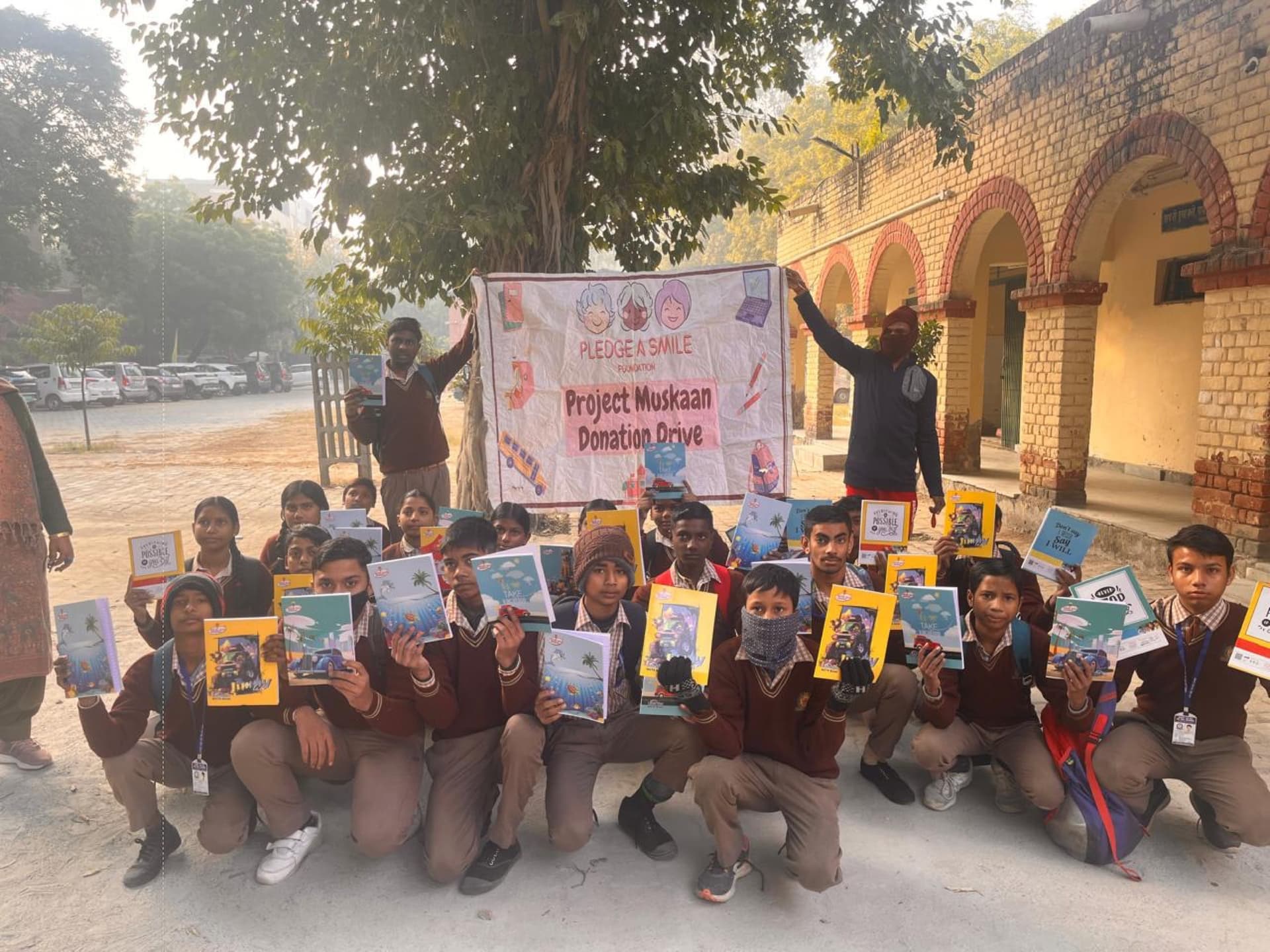
- Joining a charity's own remote programme. Pledge A Smile Foundation (the publisher of this guide) runs an online internship that is open to students of any stream and free to apply to and to do. Interns own a weekly target, send a weekly report and get feedback on it. There is a performance-based stipend and a certificate on completion. It does not teach subject-specific technical skills.
Which route fits your semester?
During term, fieldwork takes two days a week at Bengaluru City University, so an in-person internship elsewhere would compete with it; online work can fill the hours your attendance leaves free. In a vacation, a woman from outside the Tier-I cities can consider the Ministry of Women and Child Development's two-month in-person batch in Delhi. Around block placement, add nothing that competes with those 30 days.
- First and second semesters: fieldwork visits and, at BCU, the social work camp come first. A UN task has a fixed end within 12 weeks, which makes it easy to fit.
- The summer after the second semester: at DU the summer internship slot goes to block placement, 1 May to 15 July. Elsewhere, a woman student from outside the Tier-I cities can aim at the WCD May-June term, applying on the portal between 1 and 10 March.
- Third and fourth semesters: concurrent visits continue, and BCU's block placement follows the student's choice. An online role with a weekly report fits beside fieldwork days if your department allows it.
- Any break long enough: DCPCR's offline internships run two to six months, so they suit a student who can be in Delhi for that long. NISD's run four weeks to three months; apply by the 25th of the month before, with the college letter saying you have no classes in that period.
Whatever you choose, tell your fieldwork coordinator before you start, and keep any certificate or report in the form your department files.
- 1Bengaluru City University's 2025-26 MSW syllabus sets fieldwork at two days and at least 15 hours a week in agencies the department allots, plus at least 30 working days of block placement.
- 2The University of Delhi's MA Social Work syllabus, effective from 2018-19, gives 900 of 3,000 marks to field work, requires 90 percent field attendance and bars students from part-time work or any job during the course.
- 3The Ministry of Women and Child Development's internship pays a lump sum stipend of Rs. 20,000 per month for a two-month batch in Delhi, open to women aged 21 to 40 from outside eight Tier-I cities.
- 4On 25 September 2026, 27 of the 50 first-page listings on Internshala's work-from-home social work page were unpaid.
- 5Internships at the National Institute of Social Defence (NISD) and NITI Aayog are unpaid and need a college letter saying the student has no class attendance during the internship; the Department of Social Justice and Empowerment scheme pays Rs. 10,000 a month at the end.
Can an online internship replace MSW block placement?
Neither the Bengaluru City University nor the University of Delhi MSW syllabus provides for it. At Delhi, block placement is judged by two external examiners on a written report with the external supervisor's comments and a viva voce, and BCU students who miss the 30 working days reappear for both field work and block placement. Ask your department before planning anything else in that slot.
Does the WCD internship lead to a government job?
No. The Ministry of Women and Child Development's guidelines ask each selected intern to declare that the internship is not an offer of a job or a commitment of any future job, and to sign a declaration of secrecy before reporting. A Selection Committee picks the interns and may invite university faculty or subject experts to help.
Is the WCD internship open all year?
Yes, in four two-month terms: May-June, August-September, November-December and February-March, with up to 20 interns per batch. Applications go in on the portal between the 1st and 10th of the month two months before the term (1 to 10 March for May-June), and a candidate selected once cannot apply again.
How long does DCPCR take to process an internship application?
At least three weeks. The Delhi Commission for Protection of Child Rights processes internship applications on a rolling basis with no deadline, takes interns in offline mode only for two to six months, and gives full-time interns a modest stipend plus official travel reimbursement.
What languages are UN online volunteering tasks posted in?
English, French or Spanish, under the platform rules of United Nations Volunteers (UNV), and Portuguese by prior agreement with UNV. An organisation may keep an assignment published for two weeks, so check the platform often. Each task must be done fully online in no more than 12 weeks, and the requesting organisation supervises the volunteer throughout.
Every rule above links to the document that states it. The full list, with the date each was last opened:
- 1Bengaluru City University, MSW Regulations and Syllabus 2025-26bcu.ac.in · checked 25 September 2026
- 2University of Delhi, Department of Social Work, MA Social Work syllabusdu.ac.in · checked 25 September 2026
- 3Ministry of Women and Child Development, Internship Programme guidelineswcd.gov.in · checked 25 September 2026
- 4Ministry of Women and Child Development, Internship Programme, About the Schemewcd.intern.nic.in · checked 26 September 2026
- 5Ministry of Women and Child Development, Internship portal criteriawcd.intern.nic.in · checked 25 September 2026
- 6Delhi Commission for Protection of Child Rights, Internshipsdcpcr.delhi.gov.in · checked 25 September 2026
- 7UNV Online Volunteering, assignment criteria and platform rulesexplore.unv.org · checked 25 September 2026
- 8Internshala, Social Work Work From Home Internshipsinternshala.com · checked 25 September 2026
- 9Department of Social Justice and Empowerment, Scheme for internship for UG/PG/Research Studentssocialjustice.gov.in · checked 25 September 2026
- 10National Institute of Social Defence, NISD Internship Scheme guidelinesnisd.gov.in · checked 25 September 2026
- 11NITI Aayog, NITI Internship Scheme guidelinesniti.gov.in · checked 25 September 2026
- 12National Human Rights Commission, Internship programme (Online & In-person)nhrc.nic.in · checked 25 September 2026
Pledge A Smile Foundation takes interns from anywhere in India.
A registered Section 8 non-profit. The programme is remote, open to students with no prior experience, and free to apply to.
See the internship and how to applyMore from by course
 Fieldwork & NSSMSW Fieldwork Hours: What Five Universities Put in WritingThe weekly hours, the semester minimum, the block placement days and the attendance floors, taken from the syllabi and field work manuals of five Indian universities. Plus what the UGC's 2025 regulations leave to your department, and what to do when yours publishes nothing.11 min read · 20 sourced claims
 Distance & open universityKSOU MSW: What Is Recognised, and Who Sets the Field PlacementThe recognition record for KSOU's social work degrees, read off the Distance Education Bureau's own programme list, and what the 2020 ODL regulations do and do not fix about a supervised field placement. Includes the Karnataka-only limit on study centres and what to put in writing before you accept an agency.8 min read · 21 sourced claims
 By courseInternship for BBA students: online and offline optionsBBA internships follow the electives, and four documents set four different rules on when and how long. Here is what AICTE, the UGC, two Karnataka universities and one day's listings say, online and offline.10 min read · 36 sourced claims