
What Makes an Organisation Eligible to Host MSW Field Work Students
Looking for an internship? Apply to Pledge A Smile FoundationShort answer
The university's own social work department decides which organisations may host MSW field work; Loyola College, the University of Madras, Jamia Millia Islamia and IGNOU each set their own bar. All four published manuals require a named agency supervisor inside the host and that supervisor's signature on the student's record.
- Updated
- 11 September 2026
- Sources checked
- 11 September 2026
- Read
- 11 min
- Sources
- 6
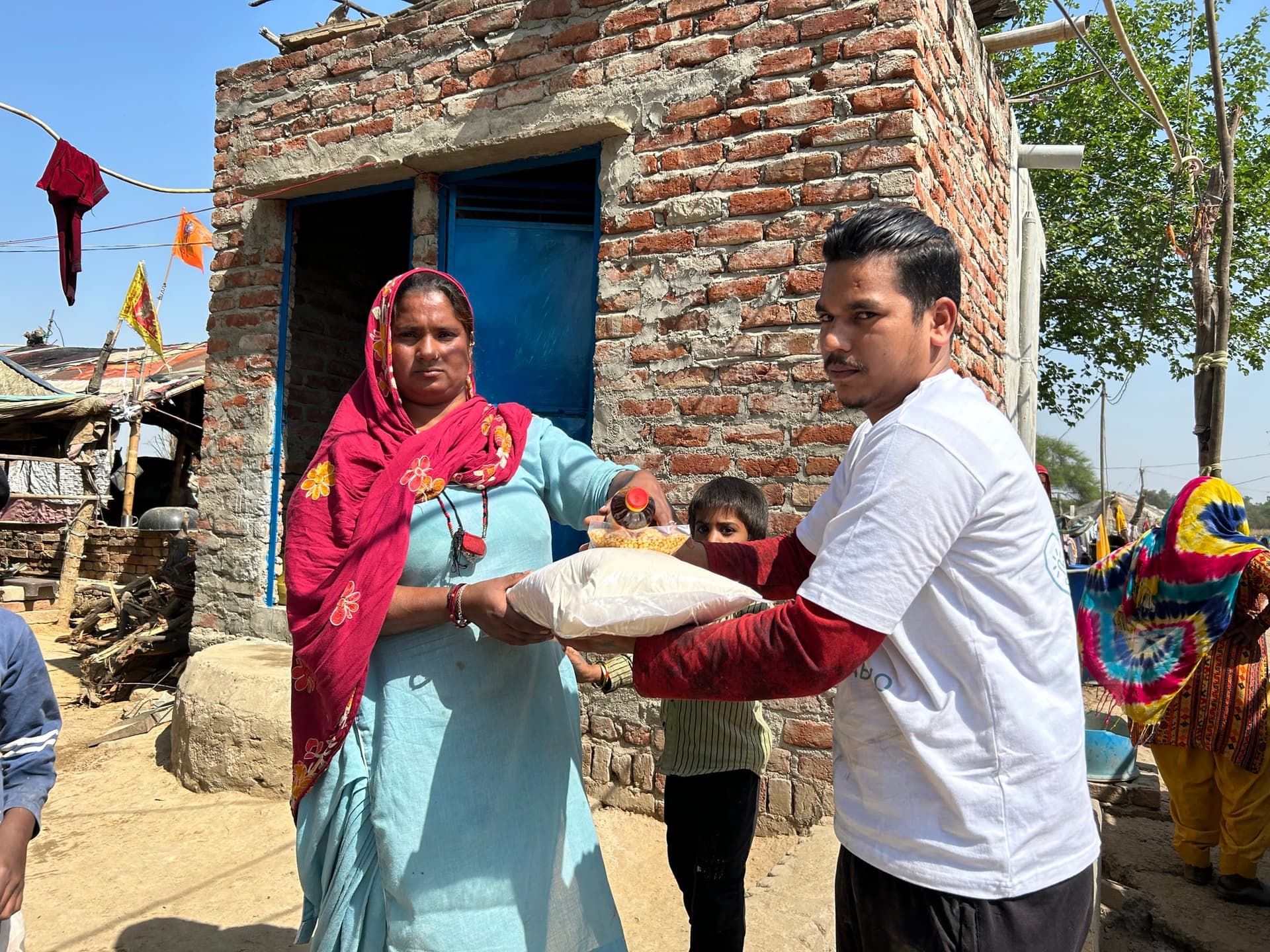
What do published MSW field work manuals require of a host organisation?
Two conditions run through all four published manuals: a named agency supervisor inside the organisation, and that supervisor's signature on the student's record. Everything else varies: office space, faculty visits, the host's share of the grade.
Three universities and one autonomous college publish their postgraduate social work field work manuals in full. Loyola College's covers the MA Social Work, the other three the Master of Social Work (MSW). The Madras file sits in the university's 2008-2009 choice-based credit system uploads and the Jamia manual is dated 2015, so a department may have revised its rules since. Treat every figure below as the published position and check the current version with the field work unit.
Loyola College and the University of Madras
| What is asked of the host | Loyola College, Chennai | University of Madras |
|---|---|---|
| A named agency supervisor | Required; must hold social work qualifications | Required; preferably a trained social worker |
| Signature on attendance or log sheets | Attests the daily field work; keeps an attendance record | Signs only duly filled log sheets; attendance register suggested |
| Share of the student's marks | 30 of 100 in the concurrent framework table | 40 of 100 each semester |
| Faculty visits to the premises | At least three a semester, some unannounced | At least one a month, each with a set agenda |
| Registration as an NGO | No requirement stated | No requirement stated |
| Time and space inside the office | Adequate time, plus professional and infrastructural support | A place to sit and keep files; weekly discussion time |
Jamia Millia Islamia and IGNOU
| What is asked of the host | Jamia Millia Islamia | IGNOU |
|---|---|---|
| A named agency supervisor | Named throughout the rules; no qualification printed | Signs the record; the MSW-qualified supervisor sits at the study centre |
| Signature on attendance or log sheets | Countersigns the joining report and the summer internship reports | Signs the log sheet on every field work day |
| Share of the student's marks | None; the faculty supervisor evaluates | None; the study centre supervisor marks out of 100 |
| Faculty visits to the premises | Regular contact for monitoring; no frequency printed | Not stated; the student travels to the study centre |
| Registration as an NGO | No requirement stated | Recorded in the agency profile, not treated as a gate |
| Time and space inside the office | Agency working hours and holidays, seven to eight hours a day | Not specified |
The share of marks is the row most people miss. An organisation can meet every condition Jamia Millia Islamia prints and still be marked, visited and countersigned on quite different terms under the University of Madras rules.
Does the agency supervisor have to be a qualified social worker?
Required at Loyola College, preferred at the University of Madras, unstated at Jamia Millia Islamia, and at IGNOU a hard rule that binds the study centre field work supervisor rather than anyone at the host. Only Loyola makes a social work qualification a condition of the host organisation's own supervisor. Loyola College's MA Social Work field work manual asks the placement agency to designate a person with social work qualifications as agency supervisor to monitor and supervise the students.
The University of Madras field work practicum manual puts it more softly: the agency supervisor should preferably be a trained social worker. Jamia Millia Islamia's MSW field work manual refers to the agency supervisor throughout its summer internship rules without printing any qualification for the role.
The Indira Gandhi National Open University (IGNOU) splits the job in two. Its MSWL-013 field work manual states that the field work supervisor must hold an MSW or MA in Social Work, that only an approved supervisor or academic counsellor may supervise the practicum, and that journals will be returned if found supervised by faculty from any other discipline. That supervisor sits at the study centre. The agency supervisor's job at the host is to sign.
An organisation running strong programmes without a social work graduate on the payroll is therefore not automatically out, and the answer differs by department. Settle it in writing before the student's first day.
Who signs the student's record, and what does a missed signature cost?
Someone inside the organisation signs, on every field work day at Loyola College and IGNOU, and at the University of Madras on the log sheets the student fills in. That signature converts hours spent into hours credited. Jamia Millia Islamia and Loyola both price the gap in the degree itself, and none of the four manuals lets a student certify their own attendance.
The Madras practicum manual is the most precise about mechanics. Log sheets are signed by the student and the agency supervisor before they reach the department supervisor, who countersigns them. The host's supervisor is asked to sign only sheets the student has duly filled in, to check that they reflect the work and hours really put in, and to watch regularity and punctuality, for which the manual suggests an attendance register.
The same manual carries a quiet penalty for the student who attends but does not write: where reports are not submitted on time, or individual conferences are missed, the field work for that period is treated as unsupervised field work.
The attendance consequences differ by university:
- Jamia Millia Islamia attaches the sharpest. A student who fails to reach 75 per cent attendance in any field work component is not eligible for evaluation, is declared to have failed field work for that semester, and is not allowed to sit the theory examinations. Below 90 per cent, the manual warns that the evaluation may be adversely affected.
- Loyola sets 100 per cent field work attendance as a mandatory requirement for completion of the degree, and prints an attendance certificate on the agency supervisor's own evaluation form.
- At IGNOU the cost is arithmetic rather than disciplinary: an unsigned sheet leaves a hole in a journal marked largely on attendance and recording, and a failed practicum has to be redone in full.
What goes into those daily entries is a separate craft, covered in the guide to writing the MSW field work diary and journal.
How much of the student's grade does the host organisation control?
Anywhere between nothing and 40 marks out of 100, and the student rarely knows which. The Madras manual gives field work 100 marks a semester, split 60 external and 40 internal, and the external 60 is 20 for the viva plus 40 awarded by the agency supervisor. Fifty per cent is the pass mark, and no revaluation is available.
Loyola's concurrent field work framework allocates 50 marks to the faculty supervisor, 30 to the agency supervisor and 20 to the external viva voce. Section 8.3 of the same manual describes internal assessment by the agency and faculty supervisors as 50 per cent of field work marks, with the viva carrying the other half, so read the department's current proforma.
The agency supervisor's form at Loyola is ten items of ten marks each, among them:
- punctuality and regularity
- adherence to values and ethical standards
- application of theory in practice
- compliance with the organisation's norms
The distance and central university manuals go the other way. Jamia's weightage of marks table gives the agency supervisor nothing, and the manual states that field work is evaluated by the faculty supervisor. IGNOU has the study centre supervisor and the School of Social Work faculty mark independently, 100 each, with 50 per cent required from both.
Inside that internal 100, the study centre supervisor's marks break down as:
- attendance and recording of the concurrent visits, 50
- the orientation visit, 20
- the conferences, 15
- the induction meeting, 10
- a completed checklist, 5
Ask which model applies before anyone signs a placement letter.
How often will faculty turn up at the organisation?
Monthly at the University of Madras, three times a semester at Loyola College, and unstated at the other two. The Madras manual requires department supervisors to make a minimum of one visit a month to the agencies where their students are placed, and gives each visit a job: the first explains the field work programme and policies to the agency supervisor, later visits build the term plan, and the last visit of the semester evaluates the student's work.
Loyola's manual asks its faculty supervisors to visit the agency at least three times during a semester "to monitor and surprise the student on site", and a footnote to its concurrent framework asks faculty to spend at least one hour a week with each student in the field.
Jamia's manual lists maintaining regular contact with the placement agency and agency supervisor for monitoring purposes among the faculty supervisor's responsibilities, without fixing a number. IGNOU substitutes conferences at the study centre for visits to the host: a minimum of five individual conferences with the field work supervisor is compulsory in each year.
None of the four lists refusal of site visits as a disqualification. An organisation that cannot let a stranger walk in and talk to the student will not meet a monthly visit schedule, and the department finds that out in month one.
Does the organisation have to be a registered NGO?
No manual among the four makes registration a condition of hosting. IGNOU's agency profile format treats it as information to collect: the student records whether the agency is registered or not, alongside its mission statement, objectives, board members, beneficiaries, geographical area and staff positions.
Registration decides money rather than eligibility. The Ministry of Social Justice and Empowerment's e-Anudaan grants portal states that before registering there, every NGO must first register on NITI Aayog's NGO Darpan portal and obtain an NGO Unique ID. That is a grant rule, not a placement rule.
The real dividing line is supervision, not paperwork. An organisation with no one to supervise and no willingness to sign a record is offering an unsupervised volunteering arrangement, which is a different instrument from a graded placement. Community service logged for a certificate runs on its own national rules, set out in the guide to the hours an NSS certificate requires.
Which settings besides NGOs can host an MSW placement?
Hospitals, schools, prisons, courts, block and ward offices, corporate departments and open communities all appear in published lists. The University of Madras manual names the observation visit settings its own students are sent to:
- non-governmental organisations in welfare and development
- government bodies involved in development work
- hospitals and health care organisations
- organisations caring for the aged, women and children
- the corporate social responsibility initiatives of corporate organisations
The University Grants Commission's Learning Outcomes based Curriculum Framework for social work, a non-binding 2019 template for the undergraduate BSW degree, lists under course FW-2 the areas for at least five observation visits in Semester II:
- health settings and educational settings
- community services
- services for vulnerable groups, including adoption agencies and rehabilitation centres
- the criminal justice system: prisons, courts, police stations and agencies under the Juvenile Justice Act
- civic administration, including ward offices and the Block Development Office
That framework governs an undergraduate degree and sets no rule for MSW placements, so read it as a map of where the profession works, not as authority for what a department will approve. Entry to a prison, a court or a children's home is controlled by that institution, so the department's letter starts the process rather than finishing it.
IGNOU's manual permits placement in a development project, an agency or an open community, and permits a student to do concurrent visits at the agency where he or she works only in the first year; later practicum must be elsewhere, and the placement is graded on social work criteria all the same.
Loyola's second-year human resource management specialisation is built around an industrial host, with tasks running from the organisation chart and workforce strength to recruitment, wage and salary administration, and industrial relations at shop floor and plant level. Being marked on social work method inside a company is one of several ways a social sector placement differs from a corporate internship.
Who approves the agency, the student or the department?
The department's field work unit. A student may propose an organisation, but the approval, the placement letter and the power to withdraw a placement stay with the faculty. None of the four manuals refers to any body that accredits social work host organisations across India, and none of them, or the UGC's curriculum framework, names one.
IGNOU's manual has the field work supervisor identify the agency according to the student's learning needs, or lets the student choose one and carry a letter signed by the supervisor or study centre coordinator seeking the organisation's acceptance. Madras states that there should be a clear policy for the selection of appropriate agencies, and that an agency discontinued for concurrent field work, temporarily or permanently, is informed by the department.
Jamia documents a written change procedure for the summer internship only: where a research project cannot be done at the student's existing agency, the faculty supervisor intimates the field work unit in writing with justification and suggests the alternative, which the unit then checks for research opportunities. It prints no equivalent route for changing a concurrent agency mid-semester.
Standing is a relationship rather than a certificate, renewed each year. Madras builds that in with an annual agency supervisor meet that all its department supervisors must attend. An autonomous college and a university in the same city can reach opposite conclusions about the same organisation.
Where do approved placements come apart, and what prevents it?
In three places, all of them settled before the student's first day: a supervisor named on paper who has no time to supervise, hours the organisation cannot staff, and money nobody mentioned. Only Jamia prints a change route, and only for the summer internship, so the conversation before day one carries most of the weight.
Put the supervision question first, and in writing. Who will supervise, what qualification do they hold, and how many hours a week can they give the student. A host that answers the first two and not the third meets the letter of the manual and leaves the student little to record.
Hours are the commonest mismatch, because departments count them differently. Loyola's second-semester concurrent framework alone runs to 30 days and 225 hours across four units, at 7.5 hours a day, while Jamia expects seven to eight hours on an agency working day. The guide to how many field work hours an MSW requires sets out what each university publishes.
Money is the third. None of the four manuals contemplates a student paying the host, so a request for a fee belongs in front of the field work unit. Loyola's block placement rules run the other way: the organisation is asked to meet the trainee's travel expenses as far as possible, any stipend must be notified to the head of department, and a trainee placed as an employee of the organisation pays half that salary to the department.
Two documents settle most of this in advance: the department's field work manual states what the host is expected to sign, and its evaluation proforma states what the student is marked on. Reading both takes an afternoon.
- 1Approval sits with the university department's field work unit, and a clearance at one university carries no weight at another.
- 2The host's share of the student's marks ranges from 40 of 100 each semester at the University of Madras to nothing at Jamia Millia Islamia and IGNOU, where faculty and study centre supervisors do the marking.
- 3Only IGNOU makes a qualification absolute, and it applies to the study centre field work supervisor rather than the host's: journals are returned if found supervised by faculty from another discipline.
- 4Registration as an NGO is not a condition of hosting in any of the four manuals; IGNOU's agency profile merely records whether the agency is registered.
- 5Site visits are built in: Madras expects a departmental visit at least monthly, Loyola at least three a semester, some of them unannounced.
Who does the organisation tell when a student stops turning up?
The department, not the student. Loyola College's manual asks the placement agency to ensure professional work habits and to bring any shortfall on the student's part to the notice of the department. At the University of Madras it is the department supervisor who maintains the record of irregularities in attendance, late or missing reports and absence from conferences. Staying quiet until the semester ends leaves the department with a record it cannot verify and no time to fix the placement.
Does the college pay the organisation or the agency supervisor anything?
None of the four manuals describes a payment to the host or to the agency supervisor. The exchange runs on professional access instead: the University of Madras brings host supervisors into its Supportive Field Instruction Programme as resource persons, and holds an agency supervisor meet at least once a year. A department that pays an honorarium would set that out in its own field work rules, so ask rather than assume.
Can a student challenge the marks an agency supervisor awards?
It depends on the university, and at the University of Madras the answer is no: the manual states that revaluation of the field work programme is not permitted under any condition. IGNOU builds in a second opinion instead: the same journal is marked twice over, once at the study centre and once externally by IGNOU School of Social Work faculty, and both marks have to reach 50 per cent. At Jamia Millia Islamia the agency supervisor holds no marks, so there is nothing to appeal against.
What does an organisation hosting its first student have to produce?
No accreditation, and no proof of registration. The manuals ask for a person and some information. IGNOU has the student compile an agency profile from what the host supplies, including its funding sources, its beneficiary numbers and the qualifications of its staff. Beyond that the host needs someone willing to be named as agency supervisor and to sign the record, and a decision on which live programme the student would join.
Can field work be done with no host organisation at all?
IGNOU's MSWL-013 manual allows an open community placement arranged by the field work supervisor, so an agency is not compulsory there. What cannot be dropped is the supervision: the study centre still assigns a qualified supervisor, five individual conferences a year remain mandatory, and 45 concurrent visits still have to be recorded. Departments that run only agency-based concurrent field work will not offer the open community route, so check the manual your own university publishes.
Does a remote or work-from-home placement satisfy MSW field work?
Nothing in these four manuals contemplates it. They assume physical presence: an attendance register at the agency, a place inside the office for the student to keep field work files, log sheets signed on site, and departmental visits to the premises. Jamia Millia Islamia goes further and requires students to observe the agency's working hours. A university may permit a remote arrangement by separate order, so treat written confirmation from the field work unit as the only reliable answer.
Does the host organisation have to sign a formal MoU with the department?
No standalone memorandum of understanding appears in any of the four manuals. Loyola College says the department enters into a collaborative relationship with placement agencies and supplies them with the field work requirements, objectives and responsibilities. What binds in practice is the placement letter from the department and the signed attendance record from the host. Some universities do require a separate written agreement as local policy, so ask before treating the letter as sufficient.
Every rule above links to the document that states it. The full list, with the date each was last opened:
- 1Loyola College (Autonomous), Chennai, Department of Social Work, Field Work Manual, MA Social Work, section 6.6 Role of the Placement Agenciesloyolacollege.edu · checked 22 August 2026
- 2University of Madras, Master of Social Work Field Work Practicum Manual, Distribution of Responsibility between Department and Agency Supervisorsunom.ac.in · checked 22 August 2026
- 3Jamia Millia Islamia, Department of Social Work, Field Work Manual, Masters in Social Work (2015), Annexure 1, Field Work Rules for Concurrent Field Work, clauses 1, 3.2 and 3.3jmi.ac.in · checked 22 August 2026
- 4IGNOU School of Social Work, MSWL-013 Field Work Manual for Students, Block 1egyankosh.ac.in · checked 22 August 2026
- 5University Grants Commission, Learning Outcomes based Curriculum Framework for BSW / BA Honours in Social Work, 2019, course FW-2ugc.gov.in · checked 22 August 2026
- 6e-Anudaan, Ministry of Social Justice and Empowerment, NGO Registration instructionsgrants-msje.gov.in · checked 22 August 2026
Pledge A Smile Foundation takes interns from anywhere in India.
A registered Section 8 non-profit. The programme is remote, open to students with no prior experience, and free to apply to.
See the internship and how to applyMore from fieldwork & nss
 Fieldwork & NSSMSW Fieldwork Hours: What Five Universities Put in WritingThe weekly hours, the semester minimum, the block placement days and the attendance floors, taken from the syllabi and field work manuals of five Indian universities. Plus what the UGC's 2025 regulations leave to your department, and what to do when yours publishes nothing.11 min read · 20 sourced claims
 Fieldwork & NSSMSW Field Work Diary Format: How to Write Each EntryA worked specimen entry, the difference between process and summary recording, and who at your department decides each of them. Drawn from the field work manuals of IGNOU, Jamia Millia Islamia, the University of Madras and Loyola College, and from Pondicherry University's 2025 MSW syllabus.14 min read · 24 sourced claims
 NGO sector & careersNGO Internship vs Corporate Internship: What Really DiffersAICTE puts an NGO, a government body and a company in one row of its credit table, and UGC’s undergraduate guidelines never distinguish hosts by type, so the choice is not about academic value. It is about signatures, supervision and what you can name at the viva.10 min read · 17 sourced claims