
Internship for political science students: the work, the routes and who pays
Looking for an internship? Apply to Pledge A Smile FoundationShort answer
Political science students can intern at NITI Aayog, the Ministry of External Affairs (MEA) and PRS Legislative Research. NITI Aayog takes undergraduates past semester four with 85% in class 12, unpaid; MEA pays ₹10,000 a month to graduates and some final-year students. UGC guidelines of 2023 make 60 to 120 hours after semester four mandatory for UG students.
- Updated
- 26 September 2026
- Sources checked
- 25 September 2026
- Read
- 13 min
- Sources
- 15
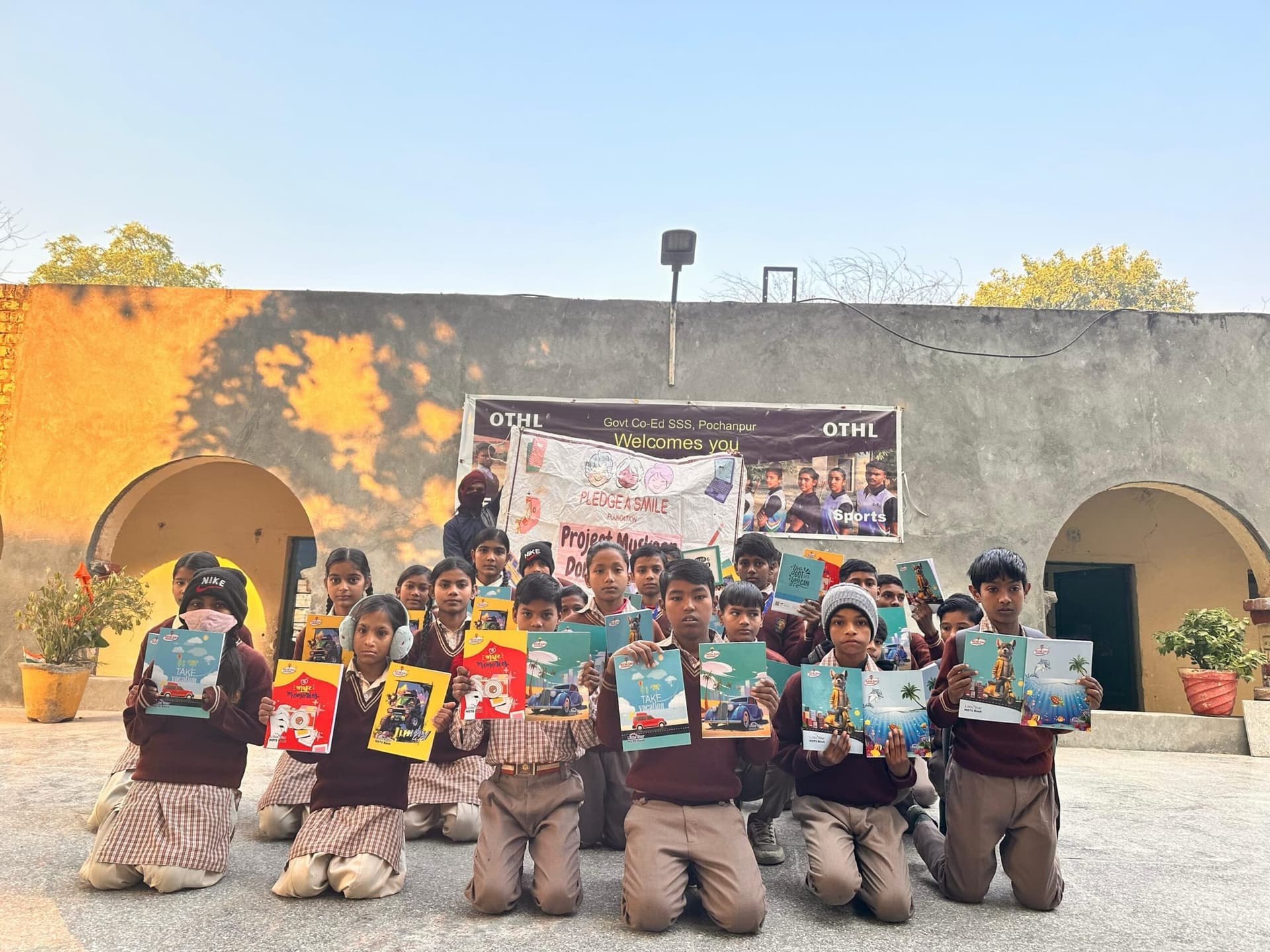
What does a political science intern actually do all day?
The Delhi Commission for Protection of Child Rights (DCPCR) says on its internships page that interns typically help with policy briefs and summaries, "background research, field visits, data analytics", notices and summons, meeting minutes and documentation, social media included.
At PRS Legislative Research, a not-for-profit group in New Delhi that works on Parliament and state assemblies, interns join analysts on research tasks or the outreach team on legislator engagement, media output and the Student Parliament programme, going by its opportunities page. Each is placed as a research, data or design intern, and finishing requires a project on a topic chosen with PRS staff.
Government offices describe the same work in their own words. NITI Aayog's internship scheme order says interns supplement its analysis "through empirical collection and collation of in-house and other information", and may contribute briefing reports and policy papers. The Ministry of External Affairs (MEA) says its interns "may be required to conduct research, write reports, analyze evolving developments", and each hands in a detailed report at the end.
That report may not be yours to show. MEA keeps the outcome of an intern's study as its intellectual property, so ask before you put it in a portfolio.
Does a BA political science degree require an internship?
Yes. The Guidelines for Internship/Research Internship for Under Graduate Students, which the University Grants Commission (UGC) put out in 2023, require students in UG degree programmes to finish between 60 and 120 hours of internship after the fourth semester, and let a minimum of 2 to 4 of a degree's 120 or 160 credits go to it. Your university's syllabus fixes the semester and credits; read it before looking for an internship for BA political science students.
A credit is small. Under the guidelines, a single credit of internship equals two hours a week, which adds up to 30 hours over a 15-week term. At that rate 2 credits come to 60 hours and 4 credits to 120.
The hosts a political science student would pick are already on the UGC's list. The UGC's undergraduate Curriculum and Credit Framework promises internships with "local governments (such as panchayats, municipalities), Parliament or elected representatives", media organisations and others. The 2023 guidelines add non-government organisations and research organisations.
Online hours are their own question; see UGC credit for online internships. If you plan to teach civics after your degree, the guide for B.Ed and teaching students covers internships in teacher education.
Which government internships take political science students, and from which year?
NITI Aayog, the Ministry of External Affairs (MEA), the Lok Sabha and the Department of Social Justice and Empowerment all take political science students. An undergraduate can apply to NITI Aayog once the fourth semester is done; MEA wants a degree, or a final year whose course requires an internship, and an age of 25 or under; the Lok Sabha wants Indian citizens aged 21 to 28.
NITI Aayog's NITI Internship Scheme order, dated November 2018, takes undergraduates "having completed/appeared in the term end exams of second year / 4th semester" who scored at least 85% in class 12. Postgraduates qualify after their first year, with 70% in graduation. Its list of domains includes Governance, Social justice and empowerment, and Rural Development and SDGs.
Economics sits on the same list; the guide for economics students takes it from there. A NITI internship lasts six weeks to six months, and the order lets NITI Aayog review the scheme at any time, so check its website for the current application link.
The Ministry of External Affairs takes graduates. Its internship portal says headquarters internships are "generally" open to Indian citizens who hold a degree when applying, and to students in their final year whose final-year curriculum makes an internship compulsory. Applicants can be at most 25 on 31 December of the year they intern. Each term takes up to 30 interns, for one to three months each.
The portal splits the country by term. Term I (April to September) considers applicants from 14 states, among them Bihar, Maharashtra and Karnataka, plus Delhi and three other union territories. Term II (October to March) covers the other 14, among them Uttar Pradesh, West Bengal and Tamil Nadu. A notice and timeline for Term II of 2026, dated 10 September 2026, are on the portal.
The Lok Sabha Internship Programme runs for a year. Its programme page says five interns are selected every year, the programme normally begins in January and ends in December, and it is open to Indian citizens between 21 and 28 years of age. Advertisements appear in October and November in national and regional newspapers and on the Lok Sabha website.
One government internship for political science students names the subject outright. The Department of Social Justice and Empowerment's Scheme for internship for UG/PG/Research Students, an undated three-page order on its website, is open to undergraduates, postgraduates and research scholars in Sociology, Anthropology, Political Science, Public Administration, Law, Education and allied fields. It lasts up to six months.
The same order's statement of objective names only "Post Graduate students/Research Fellows", while its eligibility clause includes undergraduates. It takes applications only "in response to an Advertisement/Circular" from the department, on plain paper, with a letter of recommendation from your supervisor, head of department or principal and three areas of the department's work you would like. Sociology students can apply too; the guide for sociology students covers their other routes.
The National Centre for Good Governance (NCGG), an autonomous body under the Ministry of Personnel, Public Grievances and Pensions, names no subject at all. Its NCGG Internship Scheme page takes graduates, postgraduate students, final-year students interning for a dissertation or capstone project, and recent graduates awaiting their degree certificates, aged 30 or under. Interns work at its Delhi or Mussoorie campus for 8 weeks to 6 months.
Its online form opens in the first week of every month, from six months ahead until two months before your chosen month, and you may apply once every six months. Selection is a screening and then a personal interview, and interns need 80% attendance for the experience certificate.
Which of these internships are paid?
A paid internship for political science students is on offer at the Ministry of External Affairs, which pays ₹10,000 a month, the National Centre for Good Governance, which pays the same, and the Social Justice department, whose ₹10,000 a month is paid when the internship ends. The Lok Sabha pays a monthly stipend and DCPCR pays full-time interns a stipend, neither with a printed amount. NITI Aayog and PRS Legislative Research are unpaid, and NIAS pays only select interns who work more than three months.
| Programme | Pay, in the programme's own words | Other support it names |
|---|---|---|
| NITI Aayog | "on unpaid basis" | Working space and internet; interns bring their own laptops |
| PRS Legislative Research | "strictly an unpaid internship" | None; no accommodation |
| Ministry of External Affairs | Honorarium, "INR 10,000 per month" | One return flight to Delhi, capped at economy fare from your state capital |
| Lok Sabha Internship Programme | "a monthly stipend", amount not stated on the page | A one-time stationery allowance and access to the Parliament Library |
| DCPCR | "a modest stipend", for full-time interns | Official travel-related reimbursements |
| National Centre for Good Governance | "A consolidated honorarium of INR 10,000 per month" | Working space and internet; interns bring their own laptops and arrange travel, lodging and boarding |
| Department of Social Justice and Empowerment | "Rs. 10,000/- per month", payable at the end of the internship | Office space with a computer; travel costs not reimbursed |
| NIAS Global Politics | Unpaid for short-term interns; "a small stipend" for select interns who work more than three months | No campus accommodation; the Guest House for up to a week |
MEA says its honorarium is paid "to defray basic costs". An intern who leaves early must give a week's notice, and the page says the flight cost is then recovered from them.
Ask DCPCR for its stipend figure, and whether you would count as full-time, before you accept. NIAS ties its small stipend to funding and the quality of work.
Is the LAMP fellowship something you can do as a student?
No. PRS Legislative Research's LAMP eligibility page says a candidate "must have at least a Bachelor's degree in any academic discipline", must be 25 years of age or below, and must be an Indian citizen. LAMP is a step for after your BA, while you are still 25 or under.
It is also a full-time year. The LAMP page says Fellows work full-time with an assigned Member of Parliament "starting from the Monsoon session of Parliament till the end of the Budget session", drafting parliamentary questions, preparing speeches for zero hour debates and drafting private members' bills. Between sessions they attend PRS workshops and go on field visits.
The student route into the same organisation is PRS's internship. It takes applications all year, typically lasts four to eight weeks, and asks research interns for analytical and writing skills and basic data handling in Microsoft Excel or Google Sheets.
Which think tanks and research institutes take political science interns?
Beyond PRS Legislative Research, two research bodies publish internships that suit a political science student: Lokniti at the Centre for the Study of Developing Societies (CSDS), and the Global Politics team at the National Institute of Advanced Studies (NIAS) in Bengaluru. Lokniti's internship page offers undergraduates, postgraduates and research scholars interested in the social sciences one month on ongoing projects in research, data collection and interpretation, with insight into election studies.
For international relations, the NIAS team, on the Indian Institute of Science campus, describes its internship on its programme page. Short-term interns stay 12 weeks and write short notes and commentaries for its publications, on areas from big power politics to maritime order and area studies.
NIAS takes short-term interns at any time of year. It asks for a resume, a cover letter covering your purpose (250 to 300 words), the exact dates you want and your areas of interest (300 to 350 words), and a reference letter from your head of department or a faculty member. Long-term internships, of six to 12 months, suit students who have completed their studies and are taking a break, the page says.
Two policy think tanks print who may apply and whether they pay. The Centre for Civil Society in New Delhi takes public policy, governance and political science students "2nd year onwards" into its governance research internship, full or part time, for at least four weeks at no fewer than 20 hours a week, from its office and unpaid. The Centre for Public Policy Research in Kochi takes undergraduates and postgraduates, preferring postgraduates, for at least 45 continuous working days on site, with no stipend.
A teacher can be the host. Under the UGC's 2023 guidelines, a research internship can be spent with faculty, scientists or mentors at universities, research institutions and other bodies, and students apply for one on their own or through a mentor at their own college, by registering on the internship portal. For political science undergraduate students, a faculty member's survey or policy study is a place to start, provided your department counts it toward the internship credits.
Where are political science internships in Delhi, and must you live there?
An internship for political science students in Delhi at PRS Legislative Research, the Ministry of External Affairs or DCPCR means reporting to an office, so you stay in Delhi for its length. PRS, at 212, Deen Dayal Upadhyaya Marg, says interns "are expected to report to office". DCPCR is on the 4th and 5th floors of the ISBT building at Kashmere Gate, and MEA interns work at its headquarters.
Staying there is your cost. MEA's page says interns "would be responsible for their board and lodging in Delhi", and PRS provides no accommodation. NITI Aayog requires at least 75% attendance, with In and Out times marked every day, and issues no certificate below that. DCPCR takes interns in "offline mode only", for two to six months, and keeps office hours of 9 am to 5 pm. It has no application deadline, and asks for three weeks before any follow-up.
Plan a Delhi internship around a break in your classes. NITI Aayog's NOC must certify that you are not registered for any course requiring class attendance during the internship.
Can you do a political science internship online?
Part of one internship in this guide can be done online. The National Institute of Advanced Studies allows its short-term internship in a hybrid mode, at least eight weeks on site and four online. PRS Legislative Research says "there are no remote work options", and the Delhi offices above expect you at your desk.
The UGC leaves room for it. Its 2023 guidelines list "Hybrid model learning" among the objectives of an internship, "combining physical and digital modes of learning", blended with a mentor or research expert "as per the need and convenience". Where a student cannot find a placement in physical mode, the same document asks the host institute to provide for a digital or group internship instead.
For a government internship, plan to work on site. The two schemes above that say where interns sit put them at a desk: NCGG gives interns working space and internet on its campuses, and the Social Justice department's order gives them office space with a computer.
Remote roles that suit the subject are research, writing and documentation with non-profits and policy groups whose listing says remote; see online humanities options. Ask your department first whether it will count the hours.
How do the routes compare for a political science student?
Judge each route on four things: the earliest year of study it takes, whether it pays, whether you must be there in person, and whether the work trains political science skills such as policy research and legislative analysis.
- A central government office such as NITI Aayog or MEA. NITI takes undergraduates after the fourth semester; MEA takes graduates and final-year students whose curriculum requires an internship. NITI is unpaid and MEA pays ₹10,000 a month. Both expect you in person, and MEA places interns in Delhi. The work is policy research and reports written inside government, for divisions that set the topics.
- The legislature, through the Lok Sabha Internship Programme or, after a degree, the LAMP fellowship. Lok Sabha picks five people a year aged 21 to 28 and pays a monthly stipend; LAMP needs a Bachelor's degree, and its eligibility and programme pages print no pay figure. Both run for most of a year. The Lok Sabha programme exposes interns to parliamentary practice and procedure; LAMP Fellows draft questions, speeches and private members' bills for an MP.
- A state commission such as DCPCR. Its page states no year of study. Full-time interns get a modest stipend and travel reimbursements, but it takes interns offline only, for two to six months, in Delhi. The work mixes research and policy briefs with drafting notices and minutes.
- A policy research group such as PRS Legislative Research. Its page states no year of study. It is unpaid, in person in New Delhi, and typically four to eight weeks long. Research interns work on tasks alongside analysts who write briefing notes on Bills, handle data, and finish a project on a topic chosen with PRS staff.
- Applying directly to a non-profit, outside any scheme. Pledge A Smile Foundation (the publisher of this guide) runs an online internship that is open to students of any stream and free to apply to and to do. Interns own a weekly target, send a weekly report and get feedback on it. There is a performance-based stipend and a certificate on completion. It does not teach subject-specific technical skills.
How do you get picked with no experience?
With writing you produce before you apply. PRS asks for a statement of purpose of "not more than 500 words", a resume in PDF, and a writing sample "on any policy issue (not more than 1000 words)", and it contacts only shortlisted candidates. Its form cannot be saved midway, so draft offline first. A brief on a bill now before Parliament, written from the bill's own text, is a sample you can make yourself.
- Mark the windows. NITI Aayog's online form opens on the 1st and closes on the 10th of every month; apply between six and two months ahead of your chosen start month, and only once in a financial year. The Lok Sabha advertises in October and November, and says its programme is for young people "with outstanding academic and extra-curricular achievements".
- State an area of interest on the NITI Aayog form. The order says applicants must indicate one, and applications that miss the eligibility conditions are rejected by the system automatically.
- Ask your college for an NOC early. NITI Aayog asks for it with your original mark sheets at joining and cancels the candidature without them; the guide to NOC letters covers how to get one.
- For MEA, expect a marks screen and an interview. It shortlists on class 12 and graduation marks, calls three candidates for every seat, and interviews by videoconference. Selection is subject to security clearance.
If PRS selects you, its page says you will be told three weeks before the intended start date. Book your stay in Delhi only after that email arrives.
- 1NITI Aayog's November 2018 internship order takes undergraduates after their fourth semester who scored at least 85% in class 12, and says the internship is unpaid.
- 2The Ministry of External Affairs pays interns an honorarium of ₹10,000 per month but takes graduates, or final-year students whose curriculum requires an internship, aged 25 or under.
- 3PRS Legislative Research's LAMP fellowship needs at least a Bachelor's degree; its student internship typically lasts four to eight weeks and is unpaid and in person in New Delhi.
- 4The University Grants Commission's 2023 internship guidelines make 60 to 120 hours after the fourth semester mandatory for undergraduates, and its Curriculum and Credit Framework names panchayats, municipalities and Parliament as hosts.
- 5The Department of Social Justice and Empowerment's internship scheme names political science among eligible subjects and pays ₹10,000 per month, payable at the end, for up to six months, when it advertises a round.
Is the MEA internship open to second-year students?
Not on the portal's stated rules. The Ministry of External Affairs takes Indian citizens who already hold a graduate degree, or final-year students whose curriculum makes an internship mandatory. Age must not exceed 25 years as on 31 December of the internship year, so a second-year student can apply in the final year if the course requires an internship, or after graduating.
Who issues the NITI Aayog internship certificate?
The Adviser of the subject division you are placed in. NITI Aayog's internship order of November 2018 says interns who do not complete the requisite period get no certificate, and anyone whose attendance falls below 75%, with In and Out times marked daily, gets no experience certificate either.
Can NITI Aayog relax the 85% marks rule?
Yes, on paper. The November 2018 internship order gives the CEO of NITI Aayog the power to relax any of its conditions for a deserving candidate. The standard bar is at least 85% in class 12 for undergraduates and 70% in graduation for postgraduates past their first year, and the online system rejects applications that miss the eligibility conditions automatically.
Can a foreign national apply for the MEA or Lok Sabha internship?
No. The Ministry of External Affairs portal opens headquarters internships to Indian citizens, and the Lok Sabha Internship Programme is open to Indian citizens aged 21 to 28. PRS Legislative Research's LAMP fellowship and the Department of Social Justice and Empowerment's internship scheme are also limited to Indian citizens or nationals.
Will my university tell me about the Lok Sabha internship?
It may. The Lok Sabha's programme page says the bureau running it writes to universities asking them to bring the programme to students' notice. It also advertises in October and November in national and regional newspapers and on the Lok Sabha website, and selects five interns a year, so check the website yourself.
Every rule above links to the document that states it. The full list, with the date each was last opened:
- 1Delhi Commission for Protection of Child Rights, Internshipsdcpcr.delhi.gov.in · checked 25 September 2026
- 2PRS Legislative Research, Opportunities at PRSprsindia.org · checked 25 September 2026
- 3NITI Aayog, NITI Internship Scheme order (November 2018)niti.gov.in · checked 25 September 2026
- 4Ministry of External Affairs internship portalinternship.mea.gov.in · checked 25 September 2026
- 5Lok Sabha (Digital Sansad), Lok Sabha Internship Programmesansad.in · checked 25 September 2026
- 6PRS Legislative Research, LAMP eligibilityprsindia.org · checked 25 September 2026
- 7PRS Legislative Research, About the LAMP Fellowshipprsindia.org · checked 25 September 2026
- 8University Grants Commission, Guidelines for Internship/Research Internship for Under Graduate Students (2023)ugc.gov.in · checked 25 September 2026
- 9University Grants Commission, Curriculum and Credit Framework for Undergraduate Programmesugc.gov.in · checked 25 September 2026
- 10Department of Social Justice and Empowerment, Scheme for internship for UG/PG/Research Studentssocialjustice.gov.in · checked 25 September 2026
- 11Lokniti-CSDS, Internship Programmelokniti.org · checked 25 September 2026
- 12NIAS Global Politics, Internship pageglobalpolitics.in · checked 25 September 2026
- 13National Centre for Good Governance, NCGG Internship Schemencgg.org.in · checked 25 September 2026
- 14Centre for Civil Society, Internship Opportunity: Policy Research & Outreach, Governance Verticalccs.in · checked 25 September 2026
- 15Centre for Public Policy Research, Internshipscppr.in · checked 25 September 2026
Pledge A Smile Foundation takes interns from anywhere in India.
A registered Section 8 non-profit. The programme is remote, open to students with no prior experience, and free to apply to.
See the internship and how to applyMore from by course
 By courseInternship for economics students: the roles, the schemes and how to applyThe RBI research internship asks economics applicants for a postgraduate degree, and so did the Department of Economic Affairs' last posted terms, from 2020. Here is what a BA economics student can apply for instead, what each route pays, and when the government windows open.10 min read · 41 sourced claimsBy courseOnline internships for arts and humanities studentsArts is India's largest undergraduate stream by enrolment, and no rule turns that into an internship for you. Here is what a literature, history, political science, fine arts, economics or sociology background can realistically do in a remote internship, and how it changes what an employer sees.8 min read · 7 sourced claims
 By courseInternship for sociology students: fieldwork, research and government routesA sociology internship is usually fieldwork your own syllabus demands, graded as a report. Here is what the UGC, three universities, NITI Aayog and the women and child ministry say about hours, pay and eligibility.12 min read · 48 sourced claims