
How to get an internship: a step-by-step guide for Indian college students
Looking for an internship? Apply to Pledge A Smile FoundationShort answer
To get an internship, find your course rule, apply through your college cell, the AICTE National Internship Portal or a listing board with a resume you can prove, then check the offer before accepting. The University Grants Commission makes 60 to 120 hours of internship compulsory for UG students after the fourth semester; your university sets the timing and approval.
- Updated
- 26 September 2026
- Sources checked
- 26 September 2026
- Read
- 11 min
- Sources
- 17

Step 1: What does your course require, and by when?
Internship may take 2 to 4 of the minimum 120 or 160 credits a bachelor's programme requires, under the UGC's Guidelines for Internship/Research Internship for Under Graduate Students, which also make 60 to 120 hours compulsory once semester four is done. Your university then fixes the credits, the timing and who must approve it.
Find that university rule before you look for a single listing. Take GJUST, the Guru Jambheshwar University of Science and Technology at Hisar: its internship guidelines of 18 June 2025 ask every UG student for a 4-credit internship lasting 4 to 6 weeks, or 120 hours, done in the summer break that follows semester two or semester four.
Engineering and technical courses follow the All India Council for Technical Education (AICTE). Its Internship Policy sets a floor of 14 to 20 credits for a B.Tech, and of 10 to 14 for a three-year diploma, drawn from a mix that includes internships, projects, seminars, start-up work and training. Ask your department which of those credits must come from an internship.
Write three answers on one page: how many hours or weeks, which vacation or semester, and whose signature you need before you start. The guides sorted by subject in the index of internships by course help with what kind of work suits your degree.
Step 2: Can you give full weeks in the vacation, or a few hours in term?
Either can count, depending on your university's rule. AICTE's Internship Policy expects interns to work full-time in the summer vacation, at 40 to 45 hours a week, the same as one credit, and part-time when classes are on. Choose the format before you apply, because it decides which listings fit.
A term-time internship is counted in much smaller units. The UGC credit framework for four-year and three-year degrees sets an internship credit at a two-hour weekly engagement; fifteen weeks of that make 30 hours. Spread a 60-hour internship over one semester and it comes to about four hours a week.
Some institutions allow only one of the two. GJUST requires its internship in the summer vacation. If your rule is the same, a term-time role would not count for credit, though it can still go on a resume. Which format suits a first-year and which a final-year student is set out in internships by year, course and format.
Step 3: Where do you look, online and through your college?
Start with three places: your college's internship or placement cell, the AICTE National Internship Portal, and listing boards such as Internshala. Internshala's remote-work page showed a count of 2,330 when checked on 25 September 2026; that number moves every day. On the AICTE portal you can narrow openings to your state, then your district.
A college cell works to a timetable. At GJUST, the head of the department or college approves and allocates internships. Each department's internship cell puts up a list of internship areas, host organisations and open positions when the even semester begins, and students apply in a set format. The same guidelines let students approach local organisations themselves.
For anyone asking how to get internship online, the route to approval is the same. GJUST's guidelines accept an internship done in physical or online mode, with the host's mentor guiding the student online or offline. Whether your own college accepts an online internship is a question for your department.
Government bodies run internships of their own, some on long notice. The NITI Internship Scheme guidelines (dated November 2018, the version NITI Aayog hosts) take online applications only from the 1st to the 10th of each month, at most six months and at least two months before the month you want to start. The internship is unpaid and runs six weeks to six months.
An undergraduate applying to NITI Aayog must have finished or sat the fourth-semester exams and scored at least 85% in class 12, may apply once in a financial year, and must bring original mark sheets and an NOC from the college on joining.
The Skill India Digital Hub lists internships too. Its filters offer only an online mode and lengths of one to three months, and each listing carries a Free or Paid tag that sits under an "Internship Fee" filter. Because that tag sits under the fee filter, open a Paid listing's terms and see what you would be charged before you apply.
The portal and the boards differ in who posts, what they charge and how they vet employers. See the comparison of listing routes for online internships.
Step 4: What should a first resume show when there is little to show?
Show only what you can prove, line by line, because some institutions check. IIT Madras's resume guidelines for the 2025-26 internship season forbid its students from rounding any grade ("7.99 is NOT 8") and cross-check each CGPA with the academic section, with penalties for a mismatch.
The same document lists what counts as proof for each kind of line. A personal project needs a link to its report or code. A project with a professor needs the professor's email naming it. Volunteering with an outside organisation such as an NGO needs a certificate or email. Skills and hobbies need no proof at all.
Those are one institute's rules for its own students, but they make a good test for anyone. If a line on your resume would fail it, rewrite the line or drop it. For a first resume, course projects, a college society role and a short volunteering stint are all fair lines, each with its evidence ready. If those lines are still blank, start with getting an internship with no experience.
Where your college prescribes a format, use it: Delhi's Jesus and Mary College (JMC), for one, requires its own CV format for every placement drive. Layout, order and a sample are in the internship resume format guide.
Step 5: How do you write an application that gets read?
Check the listing first, then answer it with work you can prove. Jesus and Mary College's Placement Cell Student Guidelines 2025-26 make each student responsible for checking eligibility, role, duties, pay, location and the organisation's background before applying, and the cell can debar a student who gives misleading information.
Internshala's application includes the question "Why should you be hired?". When an application is turned down, its help pages suggest a stronger reply to it and a complete profile, which they say improves the chances of being shortlisted. Answer that question with one piece of work you did, what it involved and what came of it.
- Open with the role's name and one line on why you fit it.
- Name the course, project or task from your resume that matches the listing's duties.
- State your availability in hours or weeks, matching Step 2.
- Close with the proof you can share on request: a link, a report, a sample.
Once you are in a process, see it through. The JMC guide warns that a student who registers for an internship drive and drops out even once can be barred from the cell's later drives.
Step 6: What happens once you are shortlisted?
The recruiter sets the rounds, and a college cell adds rules of its own. For placement drives, the JMC cell requires a registered student to attend the recruiter's pre-placement talk to stay eligible for the later rounds; she may opt out when the talk ends, but once she continues she must finish the whole process.
The same guide requires formal clothes in in-person and virtual recruitment rounds alike, on pain of disqualification from that process. It advises bringing spare copies of your CV, a valid identity card such as Aadhaar, a passport or a PAN card, and two recent passport-size photographs.
Prepare from your own resume. Any line you wrote in Step 4 can become a question, so keep the proof for each one open during a video interview, and answer with what you did, not what the team did.
Step 7: How do you check an offer before you accept it?
Check who is behind it and whether it asks you for money. On Internshala's safety page, any request to pay a fee, a deposit or a training charge in order to be hired is a red flag to report. AICTE's portal goes further and calls it a scam when an agent or website charges students for applying there.
Compare the offer letter with the listing you applied to. Internshala advises verifying before you proceed if the duties, stipend or role have changed, and keeping a copy of the offer letter and written messages as a record of what was agreed. The same page flags a request for your Aadhaar, PAN, bank details, an OTP or a password that comes early in hiring.
These are platform rules, not law. Internshala's terms bar employers from charging applicants in any form, a test fee or documentation fee included, but a site that is not bound by those terms can ask anyway. Each warning sign is taken apart in the guide to fake internship offers.
Step 8: What paperwork does your college need before and after?
Your college needs an approval before the internship and a report with a certificate after it, on its own deadline. At GJUST the sign-off comes from the chairperson, principal or director ahead of day one, and within 15 days of the last day the student hands in the report, on paper and as a PDF, with the host's certificate of work completion.
In between, GJUST's process runs in a set order. The internship supervisor issues a recommendation letter for the host; the student gets the host mentor's written consent on the university's format and hands it in with a tentative schedule; and the student informs the supervisor before starting. Other universities use other forms, so ask for yours.
Keep proof of the internship itself, too. For a finished internship to appear on an IIT Madras student's resume, the institute accepts a completion certificate or relieving letter, or the offer letter together with either the company's email acknowledging completion or stipend payment details that name the company. The papers a self-arranged internship needs are listed in the bonafide and NOC document chain.
Which route should you try first? Four routes judged on the same criteria
Try your college's placement or internship cell first where one exists, because where the cell arranged the opening, as at GJUST, the same office approves it; run a second route in parallel. Judge every route on five tests: cost to you, a stipend stated in writing, who reviews your work, how readily the college signs off, and technical depth in your own subject.
- Your college's placement or internship cell. At GJUST the head who allocates the cell's internships is also the one who approves them, and the UGC guidelines attach an internship supervisor, preferably from your own institution. Cost is small but not always nil: JMC's cell charged a ₹100 registration fee for 2025-26. Stipend and subject depth depend on the recruiter the cell brings in.
- The AICTE National Internship Portal. It says a student pays ₹0 from registration to certificate, and it sorts postings by stipend, so pay is visible before you apply. The host reviews the work. Ask your department whether it will credit a portal internship; subject skills depend on the posting.
- A listing on a job platform such as Internshala. Internshala's terms bar employers from charging applicants, and each card shows the pay (such as "₹2,000 /month") or reads "Unpaid"; the offer letter should repeat it. The employer reviews the work. College approval is yours to seek, and subject skills depend on the role.
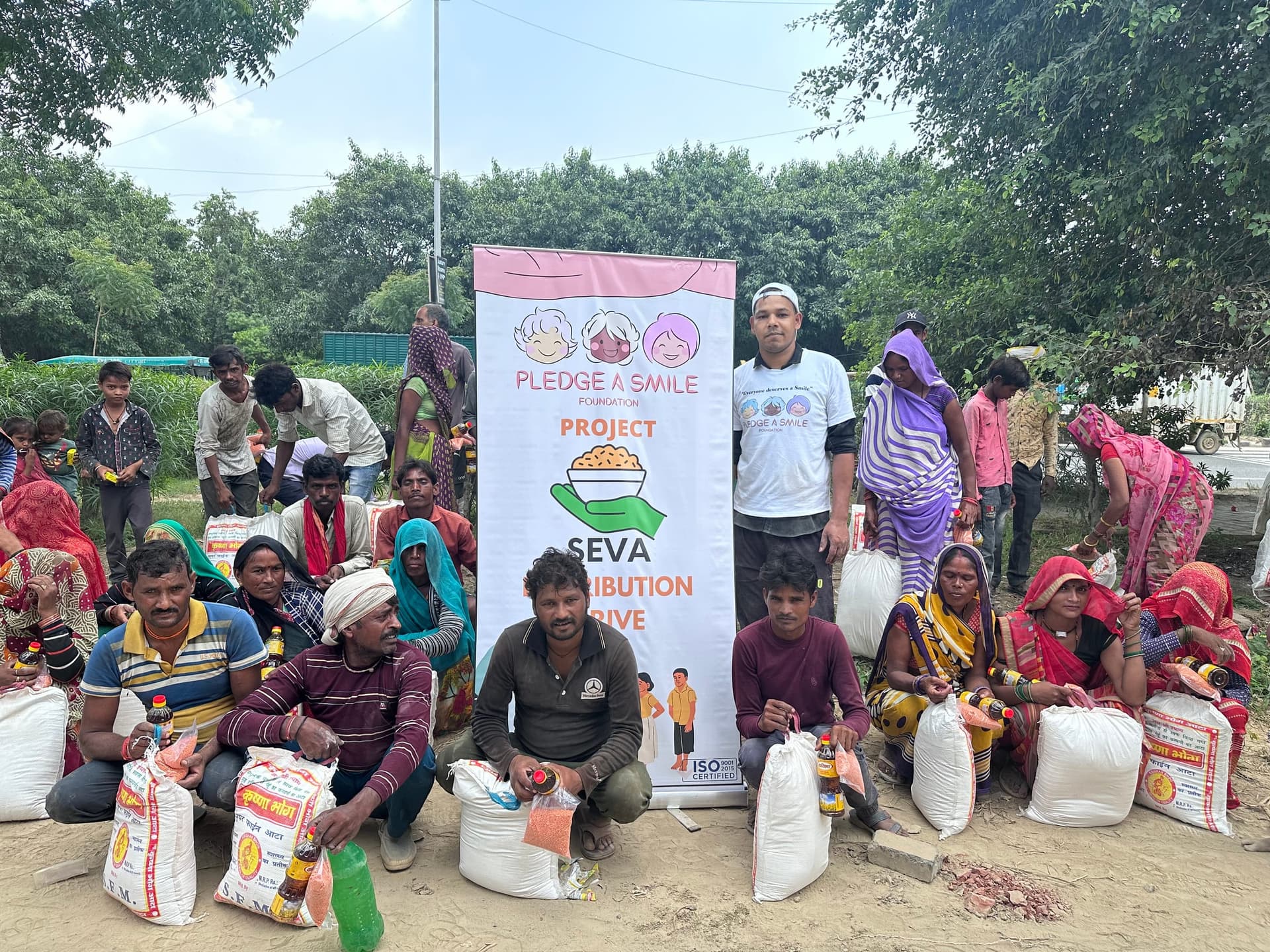
- Writing to a charity that runs an internship of its own. Pledge A Smile Foundation (the publisher of this guide) runs an online internship that is open to students of any stream and free to apply to and to do. Interns own a weekly target, send a weekly report and get feedback on it. There is a performance-based stipend and a certificate on completion. It does not teach subject-specific technical skills.
Can an international student in India get an internship?
Yes, on the right visa, which is the first step in how to get an internship as an international student in India. The Consulate General of India in San Francisco's page on the Student visa (study, research, internship) grants that visa for an internship in an Indian company, educational institution or NGO at any time during the course of study, or within two years of graduating, on a sponsoring letter that states the period.
The same page sets a minimum annual pay for internships in companies and none for educational institutions or NGOs, rules out sectors such as defence, space and telecom, and puts processing for an NGO internship at 7 to 8 weeks at least. Interns staying more than 180 days at a stretch register with the FRRO or FRO within 14 days of arrival.
The internship does not lead straight to a job in India. The same page says this visa cannot be converted into an Employment visa, and an intern offered work in India must return to the country of origin or domicile and apply for an Employment visa at the Indian mission there.
Older documents differ. The Ministry of Home Affairs' Details of Visas Granted by India (Annex III, 2018) needed no special permission for an internship within a student's prescribed curriculum, and described a separate Intern visa granted only after graduation. Confirm the current rule with the Indian mission issuing your visa and your university's international office.
Some government schemes take students enrolled abroad. The NITI Internship Scheme guidelines open it to bona fide students of recognised universities or institutions "within India or abroad", on the same marks and notice rules as in Step 3.
The PM Internship Scheme is not open to everyone. Its pilot guidelines of October 2024 required applicants to be of Indian nationality, and a release of 22 April 2026 that opened it to final-year students says applicants must still meet the existing eligibility criteria.
- 1The University Grants Commission's Guidelines for Internship/Research Internship for Under Graduate Students make an internship of 60 to 120 hours compulsory for UG students once the fourth semester is over; universities set the credits, timing and approval.
- 2Guru Jambheshwar University of Science and Technology (GJUST), Hisar, in its Internship Guidelines of 18 June 2025, requires prior approval before an internship starts and a report plus a work completion certificate within 15 days of finishing.
- 3IIT Madras's Resume Guidelines for the Internship Season 2025-26 forbid rounding any grade and accept a completed internship only with documents such as a completion certificate or an offer letter plus stipend payment details.
- 4Internshala's safety page treats any demand for money to be hired as a red flag, and the AICTE National Internship Portal calls a charge for applying through it a scam.
- 5A current Indian consulate page grants the Student visa for an internship in an Indian company, educational institution or NGO during the course of study or within two years of graduating; the Ministry of Home Affairs' 2018 visa document described a separate Intern visa.
Can my internship mentor be from outside my college?
Yes, in some arrangements. Describing cluster models in which two or three institutions pool internships, the University Grants Commission's internship guidelines say a student may choose a mentor physically or digitally, or one outside at national or international level. The same guidelines attach each intern to an internship supervisor, preferably from the student's own institution, so your college keeps a named contact.
Who can apply for the PM Internship Scheme as a student?
Final-year graduate and postgraduate students, since a Press Information Bureau release of 22 April 2026 widened eligibility to them. Applicants must be between 18 and 25, must still meet the existing eligibility criteria, and must submit a No Objection Certificate (NOC) from their institution.
Can I get an internship without my college's help?
Yes. The internship guidelines of Guru Jambheshwar University of Science and Technology (GJUST), Hisar, for one, encourage students to seek consent from local organisations themselves. You still need the college for credit: GJUST requires prior approval before the internship starts, and a report and completion certificate within 15 days of finishing.
Should I pay for a course that promises an internship?
Treat it with caution. Internshala's terms bar training programmes that require a security deposit or admission fee from applicants, and the AICTE National Internship Portal says anyone who asks a student to pay to apply through it is running a scam. On that portal, registration, applications, shortlisting and the completion certificate cost a student ₹0.
What should I do if nobody replies to my internship applications?
Give it two to three weeks, then widen the search. Internshala's help centre says employers usually take 2 to 3 weeks to go through applications and advises applying to other internships if there is no response. Meanwhile, rewrite your answer to "Why should you be hired?" around one piece of work you can prove.
Every rule above links to the document that states it. The full list, with the date each was last opened:
- 1University Grants Commission, Guidelines for Internship/Research Internship for Under Graduate Studentsugc.gov.in · checked 25 September 2026
- 2University Grants Commission, Curriculum and Credit Framework for Undergraduate Programmesugc.gov.in · checked 25 September 2026
- 3Guru Jambheshwar University of Science and Technology, Hisar, Internship Guidelines (18 June 2025)gjust.ac.in · checked 25 September 2026
- 4AICTE Internship Policy: Guidelines and Proceduresaicte-india.org · checked 25 September 2026
- 5AICTE National Internship Portalinternship.aicte-india.org · checked 25 September 2026
- 6Internshala, work from home internships pageinternshala.com · checked 25 September 2026
- 7IIT Madras, Resume Guidelines for the Internship Season 2025-26internship.iitm.ac.in · checked 25 September 2026
- 8Jesus and Mary College, The Placement Cell Student Guidelines 2025-26jmc.ac.in · checked 25 September 2026
- 9Internshala, student help centre FAQinternshala.com · checked 25 September 2026
- 10Internshala, Safety Tipsinternshala.com · checked 26 September 2026
- 11Internshala, Terms and Conditionsinternshala.com · checked 25 September 2026
- 12Ministry of Home Affairs, Details of Visas Granted by India (Annex III, 2018)mha.gov.in · checked 25 September 2026
- 13Consulate General of India, San Francisco: Student Visa (Study/Research/Internship)cgisf.gov.in · checked 25 September 2026
- 14Press Information Bureau, Prime Minister's Internship Scheme: Pilot Project (4 October 2024)pib.gov.in · checked 25 September 2026
- 15Press Information Bureau (Ministry of Corporate Affairs), PMIS eligibility expanded to final-year students (22 April 2026)pib.gov.in · checked 25 September 2026
- 16NITI Aayog, NITI Internship Scheme guidelines (dated November 2018)niti.gov.in · checked 25 September 2026
- 17Skill India Digital Hub, internships pageskillindiadigital.gov.in · checked 25 September 2026
Pledge A Smile Foundation takes interns from anywhere in India.
A registered Section 8 non-profit. The programme is remote, open to students with no prior experience, and free to apply to.
See the internship and how to applyMore from applying & starting
 Finding onlineWhere online internships in India are listed, and which route fits youFive routes, ranked on volume, competition per opening, whether a supervisor is named and cost. What each one is good at, and which of them to run first.9 min read · 14 sourced claims
 Certificates & lettersResume format for internship applications: a fresher walk-through with sampleYour college's placement cell may fix an internship resume format. If it does not, six steps, one specimen layout and the proofs a college or employer asks for behind each line.11 min read · 36 sourced claims
 Applying & startingHow to get an internship with no experience: the routes that do not ask for itNeither the UGC internship guidelines nor the PM Internship Scheme's eligibility list asks for a past internship. How the college route, the scheme, listing boards, volunteering and a non-profit's own programme compare, and what to put on a resume with nothing on the experience line.11 min read · 35 sourced claims