Volunteering in India for students: online and offline ways to start
Looking for an internship? Apply to Pledge A Smile FoundationShort answer
Students in India can volunteer through four main routes: the National Service Scheme (NSS) at college, at 120 hours of regular activities an academic year; MY Bharat, the government platform for ages 15 to 29; online tasks of 2 to 12 weeks on the United Nations Volunteers (UNV) platform; or a non-profit's own programme with a named project.
- Updated
- 26 September 2026
- Sources checked
- 25 September 2026
- Read
- 11 min
- Sources
- 12
What counts as volunteering, and how is it different from an internship?
The United Nations, on its International Volunteer Day page, describes volunteering as "giving time, skills, and energy freely to benefit others or contribute to a cause, without financial compensation." The same page says it "can be formal or informal, local or global."
That UN page puts the number of volunteers worldwide at an estimated 1 billion, and says around 70% of them volunteer informally while 30% work through formal organisations. Every route compared here is formal: each has an organisation, scheme or platform that can confirm you took part.
An internship is a role a host defines for you. A college may count it towards credits, and a host may pay a stipend, and once money changes hands for the work it falls outside the UN wording. For students under 18 the two can blur, and the legal line between volunteering and an internship is set out in the guide to the legal difference for school students. If a stipend or credit is what you are after, start with internships by year, course and format instead.
What kind of volunteer work can students do?
The NSS regular activities page gives a long official list of opportunities for volunteer work. In an adopted village or slum, volunteers pass on information about agriculture, sanitation, nutrition, legal aid, consumer protection and schemes such as Swachch Bharat, Ayushman Bharat and Digital India.
The same page lists placements with welfare agencies: community centres, residential institutions for children, women and the aged, and institutions for people with disabilities. There, volunteers read and write letters for residents who cannot, arrange outings, run literacy classes, improve the physical environment and assist in rehabilitating disabled and destitute people. Remote and virtual work looks different: the online tasks on the UN Volunteers platform, set out below, are desk work such as translation, design and report writing.
Service that your degree itself requires is a separate track, covered in community service for college students.
How should a student compare volunteer opportunities?
Judge every volunteer opportunity on six criteria before you give it a single weekend: who is allowed to join, whether the work is online or offline, how much time it asks, what record you get at the end, whether it uses a skill tied to your subject, and how you can check the organisation behind it.
- An age band or an enrolment rule shuts some readers out before anything else matters, so read eligibility first.
- Some routes need only a phone and a data pack. Others need you in a village or a hospital ward for a week.
- Read the unit of time. Hours in an academic year, a seven-day camp and a 12-week online task are three very different commitments.
- A certificate, an hours log or a profile badge is worth only as much as the work it describes.
- Community service builds general habits such as organising, reporting and talking to strangers. If you need practice in your own discipline, pick a task that asks for it.
- A government scheme is checked through your college or the ministry's own portal. A non-profit is checked on NGO Darpan.
How does NSS volunteering work in college?
You join the National Service Scheme through your own institution's NSS unit, so the route depends on your college having one. NSS is a Central Sector Scheme of the Ministry of Youth Affairs and Sports, open to classes 11 and 12 at +2 Board level and to graduate and postgraduate students. It was launched on 24 September 1969 in 37 universities.
The time commitment is on the NSS regular activities page, which says volunteers "generally work in villages, slums and voluntary agencies" and puts the figure at 120 hours of regular activities during an academic year. A unit adopts a village, or a slum where the college is urban and villages are far, and the page asks that an adopted village sit within a short distance of the college.
The Special Camping Programme page says "Every year 50 percent of the volunteers of each NSS unit are expected to participate in special camps which is of seven days duration." That is a share of the unit, not a camp for every volunteer every year. The same page asks volunteers to devote about 80 hours of regular activities to the adopted village.
Institutions add rules of their own. The NSS FAQ of IIT Hyderabad says NSS "is not compulsory for every student", yet a B.Tech student there must complete either 120 hours in NSS or 240 hours in NSO to graduate, with hours tracked on an NSS hours portal. That FAQ binds IIT Hyderabad alone. Ask your own programme officer what your college counts.
The certificate has its own condition. The University of Mysore's criteria for the NSS certificate say a volunteer who completes 240 hours of regular activities in 2 years and attends one annual special camp gets the university certificate. Both conditions apply, and a volunteer who misses them may get a certificate from the college instead.
Judged on the six criteria, NSS is open to enrolled students, mostly offline, a year-long commitment, recorded by your college, and general community work more than subject training. Certificate rules at other universities are in the rules on NSS certificates and hours, and how NSS compares with a placement you arrange yourself is in NSS or direct NGO volunteering on a resume.
What volunteering can you find on MY Bharat?
MY Bharat (Mera Yuva Bharat) is a national platform set up by the Department of Youth Affairs in the Ministry of Youth Affairs and Sports. Its home page addresses "a young citizen between the ages of 15 and 29", and its FAQ lists Experiential Learning Programmes (ELPs), Volunteering Opportunities (VOs), quizzes, events, campaigns, leadership programmes and mentorship.
Signing up takes a few minutes, going by the FAQ's own steps:
- Press "Register Now" and give either your phone number or an email address.
- Type in the OTP that arrives (six digits) to confirm it.
- Add personal details, then where you live, down to the local body and PIN code.
- Pick the Youth Type that fits you. The options are NSS, NCC, BSG, MY Bharat and Others. Then add your highest qualification.
- Submit once you have accepted the terms. Your profile now carries a unique MY Bharat ID.
Once registered, the FAQ says you can "apply for opportunities, submit tasks, update your profile, set password, download certificates". For events near you, the home page gives the path as open Events, filter by location, choose to attend or participate, then get an online certificate. Check what is listed for your district when you log in; no current event is named here because listings change.
Judged on the six criteria, MY Bharat is addressed to ages 15 to 29, mixes in-person events found by location with tasks and quizzes done on the portal, leaves the time to each listing, and offers an online certificate for events. The portal is the ministry's own. If a listing is hosted by a non-profit, that host is still worth a Darpan search.
Can you volunteer online with the UN from India?
The UN Volunteers platform at app.unv.org lists online assignments beside onsite ones, each tagged "Online" or "Onsite" with the host agency, country and duration. On 25 September 2026 the online listings shown ran for 2, 5 or 12 weeks. The listing page does not show who may apply.
UNV's Online Volunteer assignment criteria, written for the organisations that post these tasks, set the shape of the online volunteer opportunities listed there. The work must take place online, with the final product submitted over the internet, and no volunteer may be asked to be physically present at any specific location. Each assignment must be no longer than 12 weeks and posted in English, French or Spanish, or Portuguese by prior agreement.
The same page settles a naming question. It says an Online Volunteer is not deemed a UN Volunteer and is not an employee, staff member or agent of UNV or the United Nations. So you volunteer online through the UN's platform for a host agency; you do not become UN staff. The page is addressed to hosts and does not list who may apply, so read that on each assignment.
The online titles listed that day were skill tasks. They included translating project documents from English into Portuguese or French for the UNDP Resilience Hub for Africa, graphic design support for UNV Pacific Communications in Fiji and for OHCHR, preparing a report for publication for UNDP in Mauritania, and citizen engagement work for a UNDP survey in Sri Lanka.
The onsite listings the same day were postings of 3 to 12 months with UNICEF, WHO and WFP in other countries, a different commitment altogether. If you want to volunteer online from home, the online side suits someone with a second language, design or writing who can deliver in weeks. Open the assignment's own page and read its requirements before you register, and keep the task description with any message confirming you finished.
The UN marks International Volunteer Day on 5 December every year, an observance the General Assembly mandated in 1985. Its 2025 edition was the global launch of IVY 2026, the International Year of Volunteers, which follows Resolution A/RES/78/127 of the General Assembly. Ways to take part on the day are in the guide to World Volunteer Day for students.
What does applying directly to a non-profit's own programme look like?
You write to a registered non-profit, or answer its own call for volunteers or interns, and agree a piece of work with a named person there. No government portal sits in between, so the terms are whatever the two of you put in writing: the task, the hours, who reviews your work and what document you receive at the end.
Before you start, get the task and the dates in an email, along with the name of the person who will review what you send. If nobody can be named as your supervisor, any certificate you receive later has no one behind it who can confirm the work. Programmes range from a one-off event to weekly work with written feedback, so ask which one you are joining.
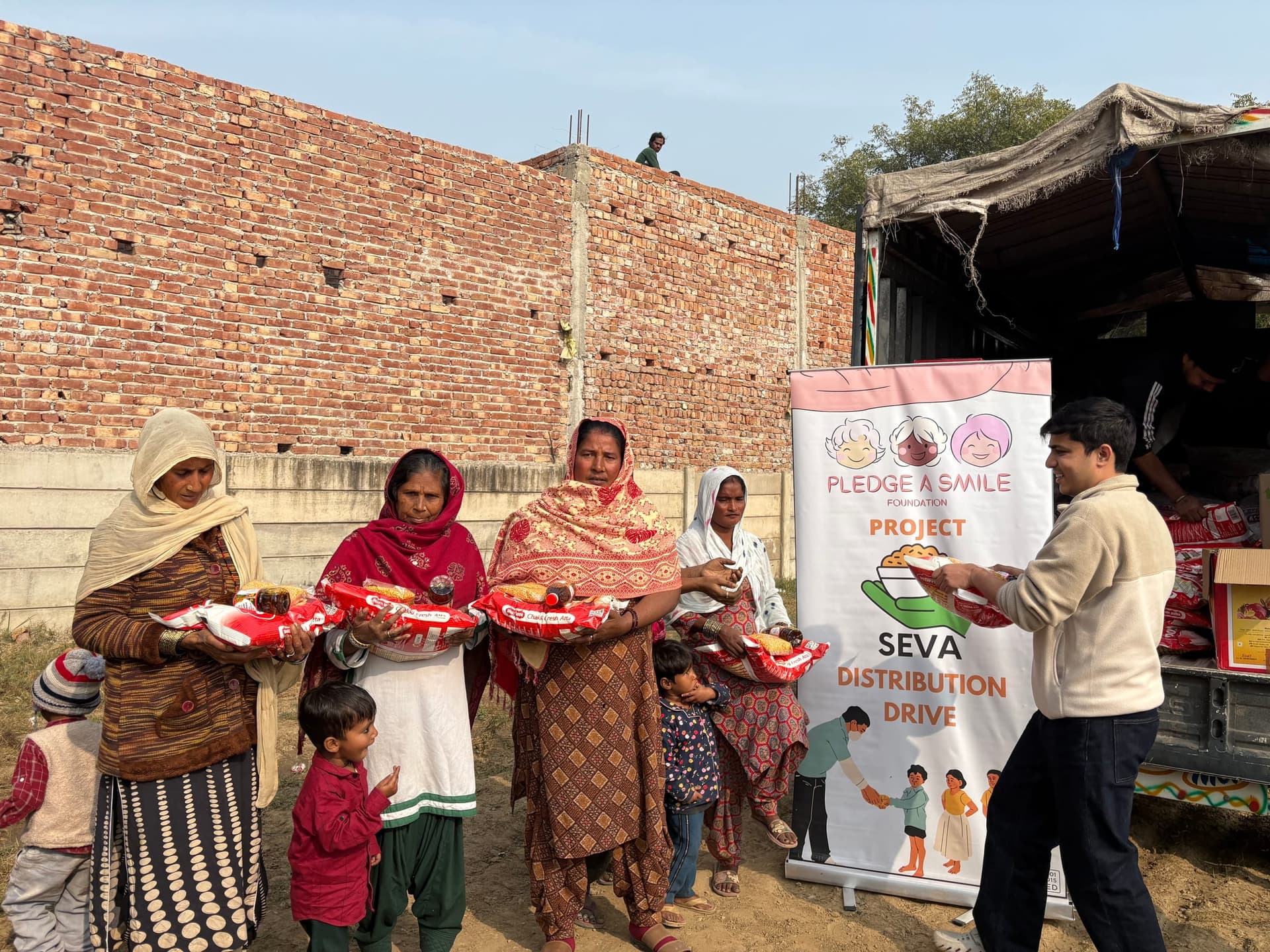
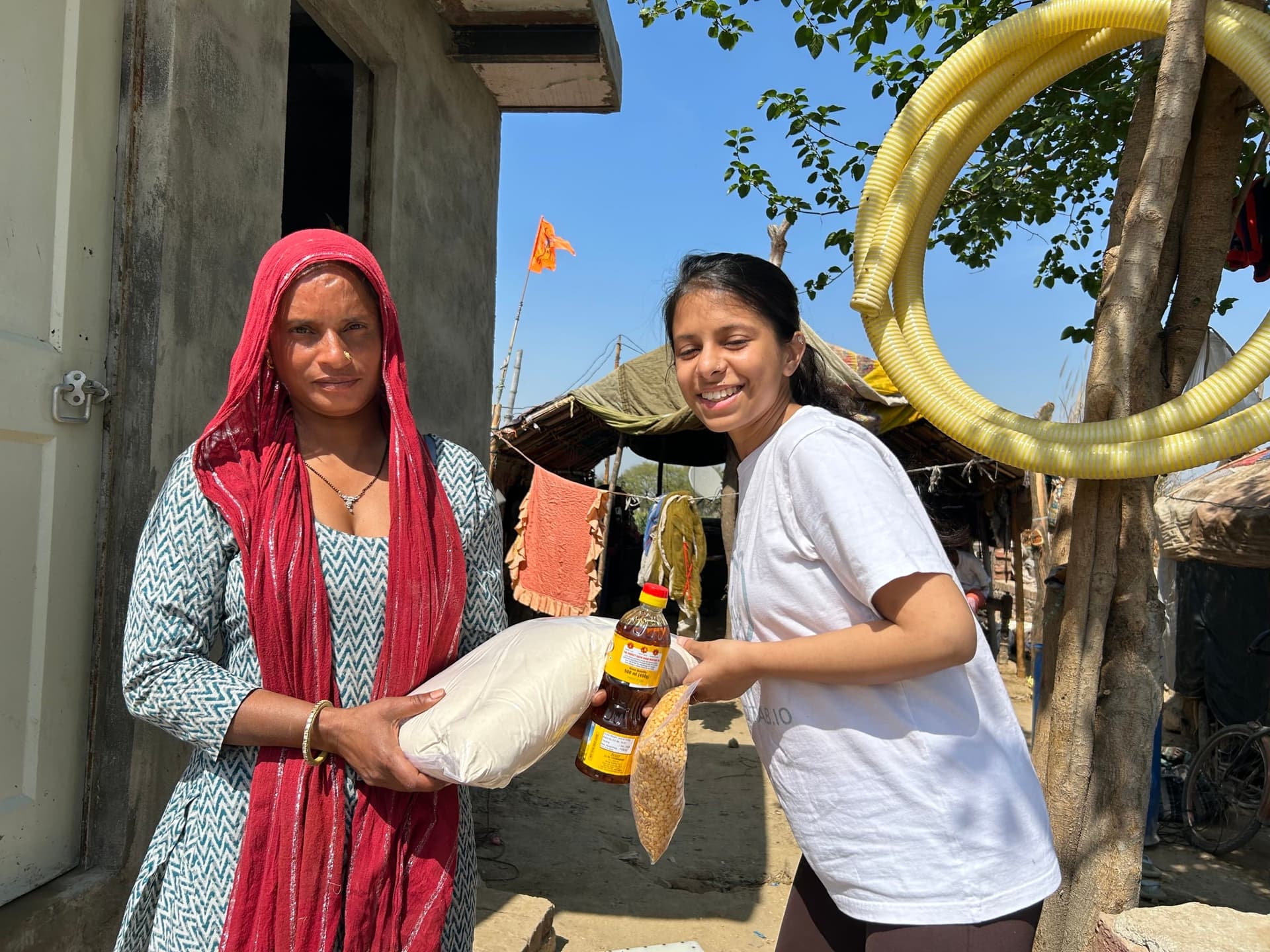
Pledge A Smile Foundation (the publisher of this guide) runs an online internship that is open to students of any stream and free to apply to and to do. Interns own a weekly target, send a weekly report and get feedback on it. There is a performance-based stipend and a certificate on completion. It does not teach subject-specific technical skills. On the six criteria, that last one is where it loses to a task built around your discipline.
How do you check a non-profit before you give it your time?
Search its name on the NPO Directory on NGO Darpan, which filters by state, district, sector, NPO type, name and Darpan ID. On 25 September 2026 the Darpan home page showed 6,18,615 Darpan IDs in total, 6,18,530 of them active and 85 blacklisted. A Darpan ID shows that the organisation registered on the portal.
It shows little else, and the portal says so: NITI Aayog issues no physical Darpan certificate and "only provides Darpan registration ID to NPOs on the basis of self-declared affidavit." Its advisory adds that the ID does not confer "any right, endorsement, affiliation, or recognition by NITI Aayog". A paper certificate presented as issued by NITI Aayog is something the portal says it does not issue.
The same page splits registered organisations into 3,08,158 trusts, 2,53,597 societies and 56,775 Section 8 companies, so the type you see in the directory should match the registration document the organisation shows you. Check the Blacklisted NPOs list on the portal as well. If anyone asks you to pay to volunteer, walk away.
A Darpan search is the first record, not the last. The fuller check of registration, tax approvals and foreign-funding registration is in the guide to verifying a genuine NGO.
Which route fits your situation?
NSS suits a student whose college has a unit and who wants a year of community work on record. MY Bharat suits anyone aged 15 to 29 who wants government-listed activities near home or on a phone. The UN Volunteers platform suits a student with a deliverable skill. A non-profit's own programme suits someone who wants a named project with a reviewer.
The table sets the four routes against the criteria from earlier, using only what each route's own pages state.
| Route | Who can join | Online or offline | Time asked | Record |
|---|---|---|---|---|
| NSS | Students at +2 level, colleges and universities, through an NSS unit | Mostly offline, in an adopted village or slum | 120 hours during an academic year; 50 percent of each unit expected at a seven-day camp | Kept by your college's NSS unit |
| MY Bharat | Addressed to ages 15 to 29 | In-person events filtered by location, plus tasks and quizzes on the portal | Set by each listing | Online certificate for events; certificates downloadable once registered |
| UN Volunteers, online | Not shown on the listing page | Online, with onsite postings listed separately | 2 to 12 weeks in the online listings seen on 25 September 2026 | Not shown on the listing page; read the assignment |
| A non-profit's own programme | Set by the organisation | Either | Agreed in writing before you start | Whatever the organisation issues; ask before you begin |
None of the four is built to teach your subject. If you need discipline practice, choose the task inside a route that asks for it, such as a translation or design listing, or a village survey, which the NSS regular activities page says bears directly on the curriculum of economics, commerce, statistics and psychology.
The routes also combine. NSS runs across the academic year, while a two-week online task fits into a vacation.
- 1NSS volunteers complete 120 hours of regular activities during an academic year, and 50 percent of each unit's volunteers are expected at a seven-day special camp.
- 2MY Bharat, the Ministry of Youth Affairs and Sports platform, is addressed to ages 15 to 29 and lists Volunteering Opportunities alongside Experiential Learning Programmes.
- 3The UN Volunteers platform tags each assignment Online or Onsite; online listings seen on 25 September 2026 ran 2 to 12 weeks, and the listing page does not show who may apply.
- 4A Darpan ID is issued on a self-declared affidavit and carries no endorsement by NITI Aayog, so it confirms registration on the portal and nothing more.
- 5The United Nations Volunteers (UNV) Online Volunteer assignment criteria cap each online assignment at 12 weeks and say an Online Volunteer is not deemed a UN Volunteer or UN staff.
Is online volunteering as good as offline on a resume?
It can be, if it gives the same facts. An online task with a named host, a period and an output, such as a 2-week design task or a 12-week translation listed on the UN Volunteers platform, reads as clearly as an offline role. What it cannot show is time spent face to face with a community, which NSS work in an adopted village does.
Do volunteers in India get paid, or do they pay?
Not by the UN's definition. Its International Volunteer Day page describes volunteering as given "without financial compensation", and a role with a stipend is closer to an internship. On UNV's own platform money should not flow the other way either: its criteria say Online Volunteers must never be asked to make financial contributions or solicit donations.
Can a first-year student join NSS?
Yes, if your college has an NSS unit and its enrolment is open. The scheme covers graduate and postgraduate students, and each institution runs its own intake. IIT Hyderabad, for example, sends its NSS registration form to all first-year students at the start of the first semester. Ask your programme officer when your college's window opens.
Do I get a certificate from MY Bharat?
The portal's own steps for events end with "Get Online Certificate", and its FAQ says a registered user can download certificates. Whether a particular opportunity carries one is set by that listing, so read it before you commit your time. A certificate records participation; describe what you actually did separately on a resume.
Can I volunteer if my college has no NSS unit?
Yes. MY Bharat registration asks for a Youth Type, and its options include MY Bharat and Others as well as NSS, NCC and BSG, so registration does not depend on NSS membership. The portal is addressed to young citizens aged 15 to 29. Online assignments on the UN Volunteers platform and a non-profit's own programme do not run through your college either.
Can students in class 11 or 12 volunteer?
Yes. The NSS home page says the scheme is open to students of classes 11 and 12 at +2 Board level, through a school that has a unit, and MY Bharat is addressed to young citizens from age 15. Students under 18 working with a private organisation should check the legal rules on minors first.
Every rule above links to the document that states it. The full list, with the date each was last opened:
- 1United Nations, International Volunteer Dayun.org · checked 25 September 2026
- 2National Service Scheme, home pagenss.gov.in · checked 25 September 2026
- 3National Service Scheme, Regular Activitiesnss.gov.in · checked 25 September 2026
- 4National Service Scheme, Special Camping Programmenss.gov.in · checked 25 September 2026
- 5NSS IIT Hyderabad, FAQsnss.iith.ac.in · checked 25 September 2026
- 6MY Bharat, home pagemybharat.gov.in · checked 25 September 2026
- 7UN Volunteers platform, listings pageapp.unv.org · checked 25 September 2026
- 8NGO Darpan, Search NPOngodarpan.gov.in · checked 25 September 2026
- 9NGO Darpan, home pagengodarpan.gov.in · checked 25 September 2026
- 10National Service Scheme, About Usnss.gov.in · checked 25 September 2026
- 11University of Mysore, NSS volunteers functions and criteria for NSS certificateuni-mysore.ac.in · checked 25 September 2026
- 12UNV, Online Volunteer assignment criteria and overall platform rulesexplore.unv.org · checked 25 September 2026
Pledge A Smile Foundation takes interns from anywhere in India.
A registered Section 8 non-profit. The programme is remote, open to students with no prior experience, and free to apply to.
See the internship and how to applyMore from volunteering
 Is it worth itNSS or direct NGO volunteering: which reads better on a resume?The NSS Manual sets 240 hours, a camp and a university certificate. A self-arranged placement sets nothing and gives you a title. Here is how each one lands on a page a recruiter scans.7 min read · 7 sourced claims
 Fieldwork & NSSCommunity service for college students: what counts and how to log itCollege service hours count only when an NSS unit, a credited course or an approved portal records them. Here are the checks in order, from the UGC credit rule and NSS hour split to the diary and the certificate.9 min read · 36 sourced claims
 VolunteeringVidyanjali: how volunteers and NGOs contribute to government schoolsThe Ministry of Education's school volunteer portal, from the Prime Minister's 'Vidyanjali 2.0' launch in 2021 to the Rajya Sabha figures of 2026. Who can offer help, what they can give, how schools and NGOs register, and how it differs from an internship.9 min read · 36 sourced claims