 Photo: Dollar Gill / Unsplash
When Project Muskaan started, it was a stationery distribution drive. We turned up at a school for a morning, handed out notebooks and pens, photographed children holding them up in the courtyard, and drove away by lunch. Everyone felt good, us included. The pictures were bright and the day was easy.
The problem is that we could not tell you what happened after we left. A notebook lasts a term. A morning lasts a morning. The children who were out of school before the drive were, for the most part, out of school after it. We had handed out supplies and called it impact, and those are not the same thing.
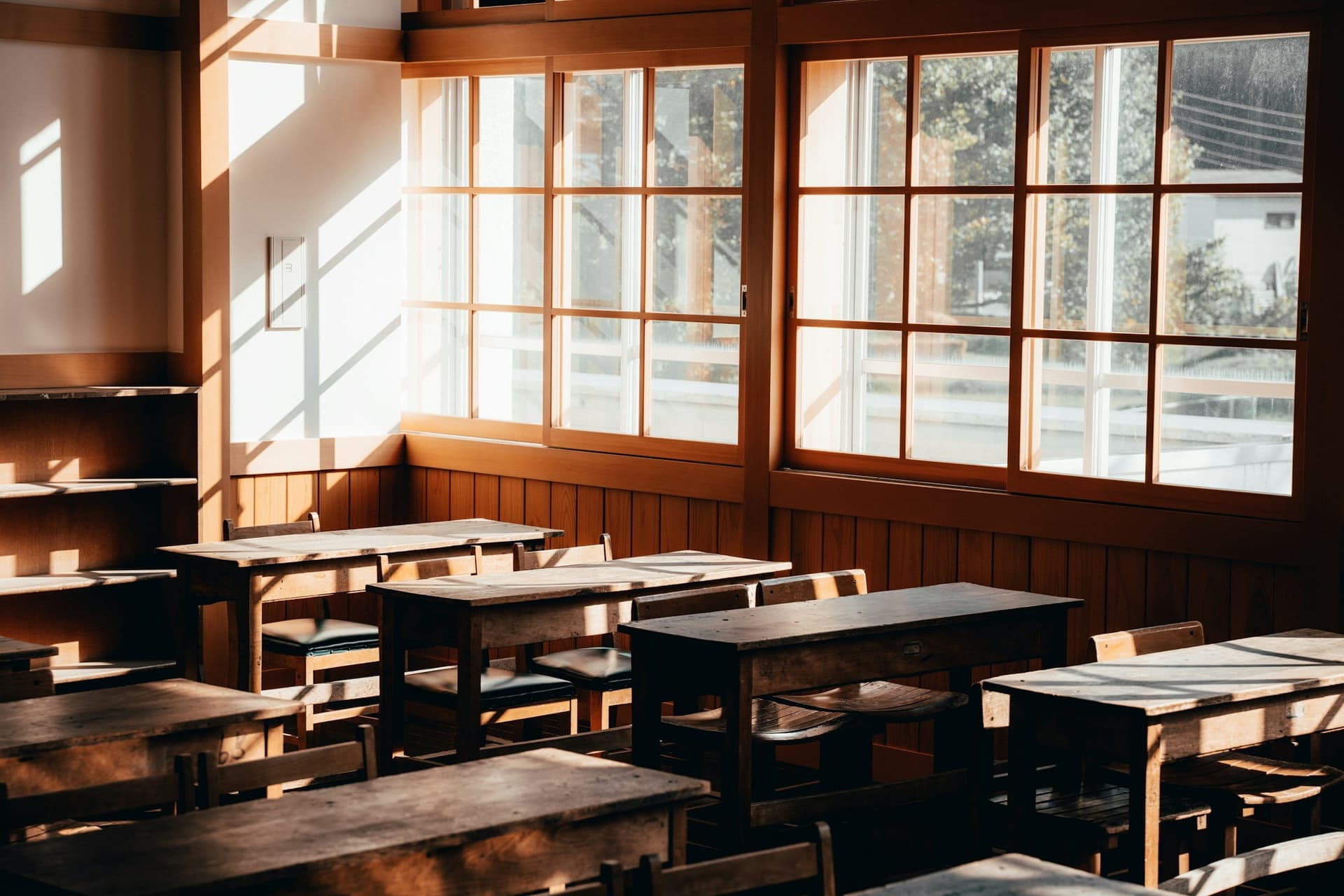
A giveaway is photogenic by design. The frame is clean: a child, a new notebook, low golden light in the school courtyard. It is the kind of picture that gets shared, and we have taken plenty of them, including the ones from the days these lessons come from.
What the picture does not show is whether that child was even enrolled, whether they came back the next week, or whether the teacher had what she needed to keep them there. The giveaway counts itself by what it hands out. For an out-of-school child, that is the wrong unit. The unit that matters is whether they are still in class months later, and a one-day drive is built to never find out.
The giveaway measures itself by what it hands out. Adoption measures itself by whether the child is still in class a year later.
Muskaan turned from a drive into a full adoption model, and the unit changed with it: from kits distributed to a centre we are responsible for. The centres are Special Training Centres, or STCs, which are bridge classrooms inside Delhi government schools, run under the Samagra Shiksha framework, where out-of-school children catch up to their age-appropriate class. We adopt one, and we do not leave when the notebooks are gone.
The cycle is four steps and it repeats. First, we identify and adopt an STC. Second, we map its needs with the teachers who actually run it, centre by centre, because the baseline is never the same twice. Third, we deliver what that map calls for: uniforms, shoes, bags, notebooks and activity materials, a projector, classroom repairs, snacks. Fourth, we track attendance, retention and how many children mainstream into formal schools, cycle after cycle, photo-documented with the children's consent.
Adoption forces a discipline that a giveaway never does, because you have to account for a whole year, not a morning. Muskaan runs on a documented cost of about 12,000 rupees per child per year, roughly 3,68,000 per centre across 30 to 35 children. It is not an estimate. It is the cost structure we report.
When you visit once, you spend on what looks good in the photograph. When you adopt, you spend against a teacher's list, and the list is mostly the boring, load-bearing things: the second uniform, the shoes that fit, the repaired classroom, the projector that turns a dark room into a lesson, the activity materials a teacher actually asked for.
documented cost per child, per year
Source · Pledge A Smile Foundation records, confirmed September 2026
Because we stay, we have a roster instead of a headcount. Muskaan works across 14 STC centres and two orphanages, the Grih Girls and Grih Boys homes, and more than 500 children have come through the programme since 2020.
The tracking is also what lets us say something an ordinary drive cannot. Attendance at the centres we support runs about five percentage points above comparable centres we do not, and every child who completed the bridge course at a supported centre in the last completed school year moved into a formal school. Five points sounds small. Across a full centre, across a full year, it is the difference between a child who drifts out and one who stays.
children supported since 2020, across 14 STC centres and 2 orphanages
Source · Pledge A Smile Foundation records, confirmed September 2026
Adoption is slower, and it is less shareable. You cannot compress a year of attendance registers into a single frame. There is no golden-hour moment when a mainstreaming statistic happens; it accretes quietly over cycles, in a spreadsheet, in a teacher's word that a child came back. Against a photogenic one-day giveaway, that is a hard thing to put on a poster.
We think it is the honest thing. A giveaway asks you to trust the photograph. Adoption asks you to look at the tracking and check whether we did what we said. It costs us the easy picture, and it buys the children something the picture never could, which is a second year, and a third.
Partners who want to adopt a centre with us rather than fund a one-off drive: write to [email protected] and we will walk you through what a year at one centre actually looks like.
- 1Pledge A Smile Foundation records, confirmed September 2026: Project Muskaan roster (500+ children since 2020, across 14 STCs and 2 orphanages), the ₹12,000 per child and ₹3,68,000 per centre cost structure, and the attendance and mainstreaming outcomes
- 2Right to Education Act 2009 / Samagra Shiksha: Special Training Centres, the bridge classrooms Project Muskaan adopts, explained by The Tribune (Haryana) Link
The numbers are real.
So is the need.