 Photo: Peter Chirkov / Pexels
Start with the figure in the title. Roughly 3.22 crore children aged 6 to 13, more than 32 million, are out of school in India (UDISE+ 2021-22). The instinct is to picture a classroom a child walked out of, a place that failed them. The data points somewhere else.
About 80% of those children come from migrant and daily-wage families (UNICEF India / RTE Forum). The story behind the number is a story about work, and about households that move to follow it. Read that way, the question stops being why children leave school and becomes when their families move, and whether the school moves with them.
children aged 6-13 out of school in India
Source · UDISE+ 2021-22, Ministry of Education
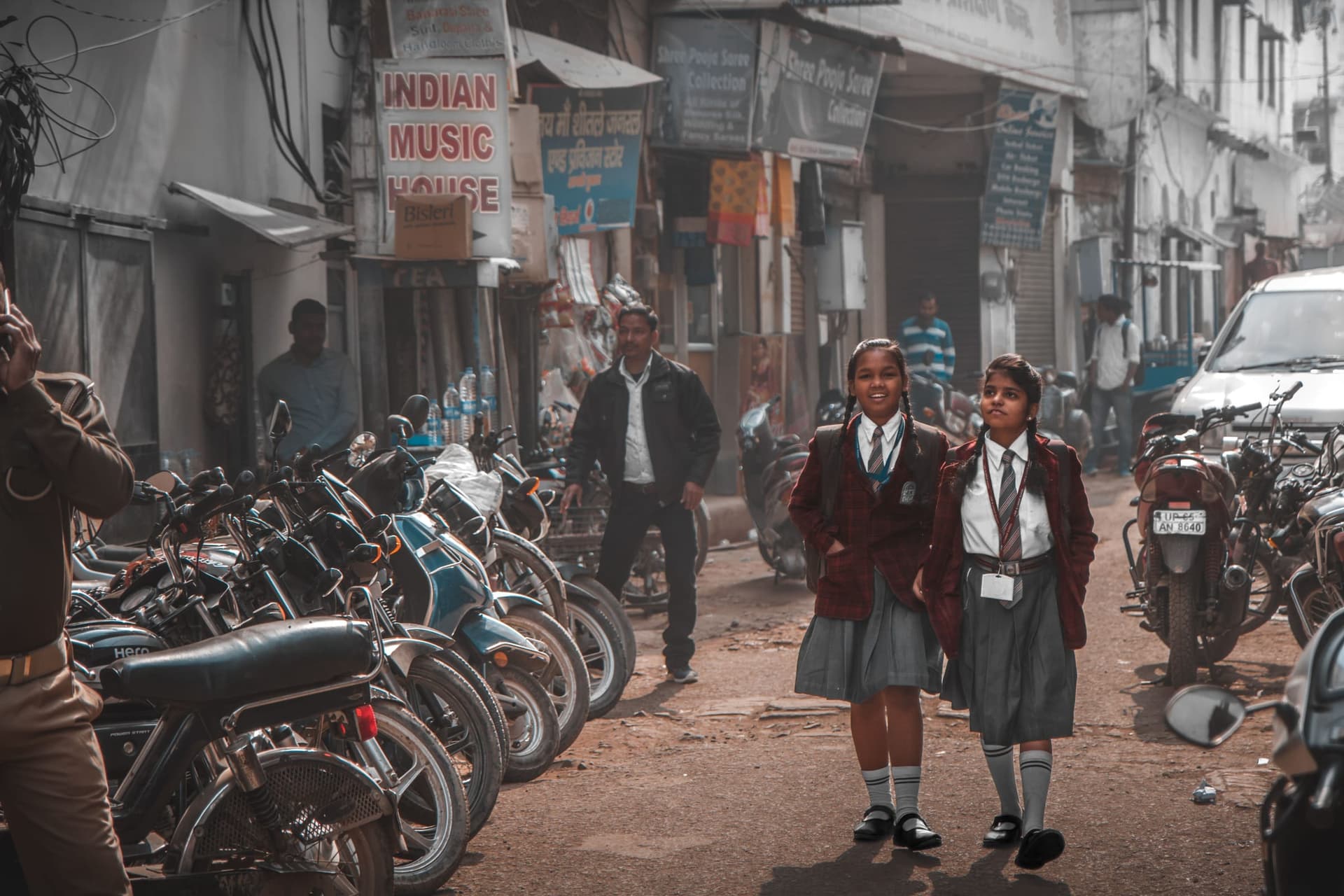
A child rarely stops going to school at a desk. They stop when the household relocates for a season of labour and the enrolment does not travel along. A UNESCO review found that eight out of ten migrant children at work sites across seven Indian cities had no access to education near their parents' worksite (UNESCO Global Education Monitoring Report 2019, reported via SPRF). School becomes seasonal. One earlier account describes migrating households whose children in effect only attend between June and November, missing large parts of the academic year and repeating classes when they return (Smita 2008, via SPRF).
The result is not a pause, it is an exit. Up to 40% of children from seasonal migrant households end up in work rather than school, and around 28% of young people who grew up in a rural household with a seasonal migrant were left illiterate or with only incomplete primary education (UNESCO GEM 2019). Migration converts, quite directly, into lost schooling.
A child rarely leaves school at a desk; they leave when the household moves for work and the enrolment does not travel with them.
The scale of movement is easy to underestimate. The 2011 Census counted about 453 million internal migrants, roughly 93 million of them children, one in every five, while other estimates put short-term circular migrants near 200 million (Census of India 2011; India Human Development Survey 2011-12, via SPRF). Much of that churn is seasonal and whole-family, and a child's enrolment breaks inside it, again and again.
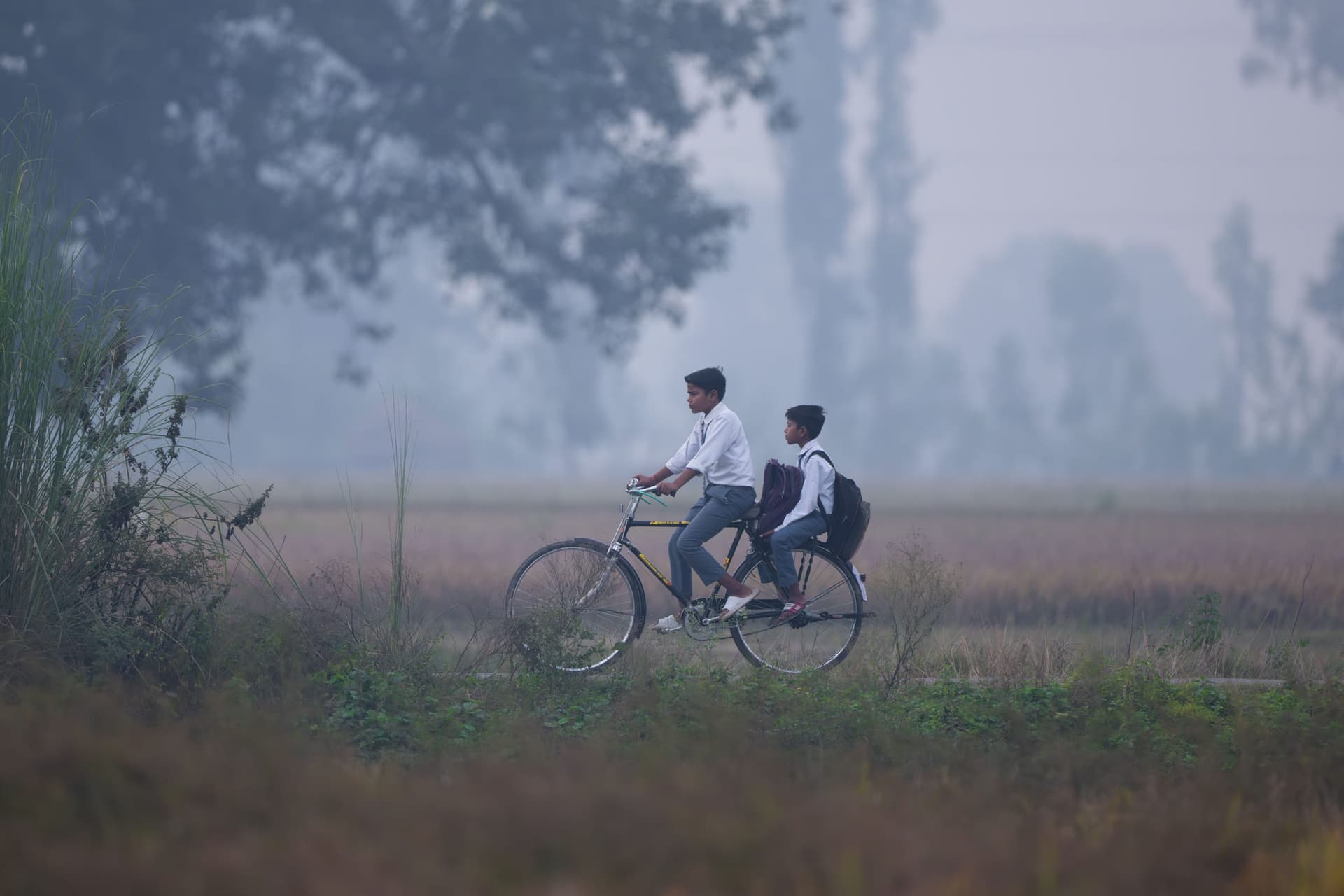
Around Delhi-NCR the drivers are specific: brick kilns, construction, harvest labour. India's brick-kiln industry alone runs more than 100,000 kilns and employs about 10 million workers, who migrate as entire families for roughly four to six months, typically September to June, the agriculturally lean stretch (peer-reviewed brick-kiln study, 2022). In the kilns of Faridabad, inside the NCR belt, labourers travel with wives and children and live on site without basic facilities (peer-reviewed study, 2018). When a family reaches a kiln in September, the school year has already begun somewhere else, without their child in it.
brick kilns employing ~10 million migrant workers who move 4-6 months a year
Source · Peer-reviewed brick-kiln study, 2022 (NCBI/PMC)
None of this is a gap the system forgot. The Right to Education Act, 2009 mandates 'special training' so that out-of-school children, both never-enrolled and dropouts, can be brought up to level and admitted to an age-appropriate class in a regular school. Under Samagra Shiksha these run as Special Training Centres, bridge classrooms delivering a roughly six-month course with free education, materials and meals before a child is mainstreamed, usually 15 to 35 children at a time (RTE Act 2009 / Samagra Shiksha, via The Tribune). The instrument to pull these children back exists. What it needs is to be kept running well.
Project Muskaan works on exactly this layer. Rather than open a parallel programme, we strengthen the STCs the state already runs: books and activity materials, uniforms, shoes and bags, classroom repairs and nutrition, so that a bridge classroom actually functions as one. We work across 14 STCs and two orphanages, and more than 500 children have come through the programme since 2020 (Pledge A Smile Foundation records, confirmed September 2026).
Every child who completed the bridge course at a centre we support, in the last completed school year, was mainstreamed into a formal school (Pledge A Smile Foundation records, confirmed September 2026). Mainstreaming is the whole point. Not a child parked indefinitely in a bridge class, but a child returned to the age-appropriate one they were pulled out of when the family moved.
children supported since 2020, across 14 STCs and 2 orphanages
Source · Pledge A Smile Foundation records, confirmed September 2026
The reason to care about how a child falls out is what sits on the other side of it. The World Bank puts the lifetime earning loss of a single child who leaves school early at about $5,700 (World Bank). Globally, it estimates this generation could lose $21 trillion in lifetime earnings to unaddressed learning loss, with per-student losses running into the tens of thousands of dollars (World Bank / UNESCO / UNICEF, 2022). A six-month bridge class costs a rounding fraction of that.
The children inside the 3.22 crore are not hard to name or hard to find. They are where the work is, at the kilns and the construction sites and the harvest. The task is not to invent something new for them. It is to make sure a school follows them there, and that the bridge back into class is actually staffed, stocked and open when they arrive.
estimated lifetime earning loss per child who drops out early
Source · World Bank
- 1UDISE+ 2021-22, Ministry of Education (elementary out-of-school children; ~3.22 crore / 32M+) Link
- 2UNESCO Global Education Monitoring Report 2019, Migration, displacement and education (80% of migrant children at worksites lack schooling; ~40% end up in work; ~28% illiterate/incomplete primary), via SPRF Link
- 3Census of India 2011 and India Human Development Survey 2011-12 (453M internal migrants; ~93M migrant children; ~200M circular migrants), via SPRF Link
- 4Peer-reviewed observational study of brick kilns (>100,000 kilns; ~10 million workers; 4-6 month seasonal migration), NCBI/PMC, 2022 Link
- 5Peer-reviewed mixed-method study of migrant families in Faridabad brick kilns, Haryana (Delhi-NCR), NCBI/PMC, 2018 Link
- 6Right to Education Act 2009 / Samagra Shiksha, special training and Special Training Centres explained by The Tribune (Haryana) Link
- 7World Bank / UNESCO / UNICEF, The State of Global Learning Poverty: 2022 Update ($21 trillion lifetime-earnings loss; per-student losses ~$6,472-$25,680) Link
- 8Pledge A Smile Foundation records, confirmed September 2026: 500+ children through Project Muskaan since 2020, across 14 STCs and 2 orphanages, and every child who completed the bridge course in the last completed school year mainstreamed into a formal school
The numbers are real.
So is the need.