 Photo: Rupinder Singh / Unsplash
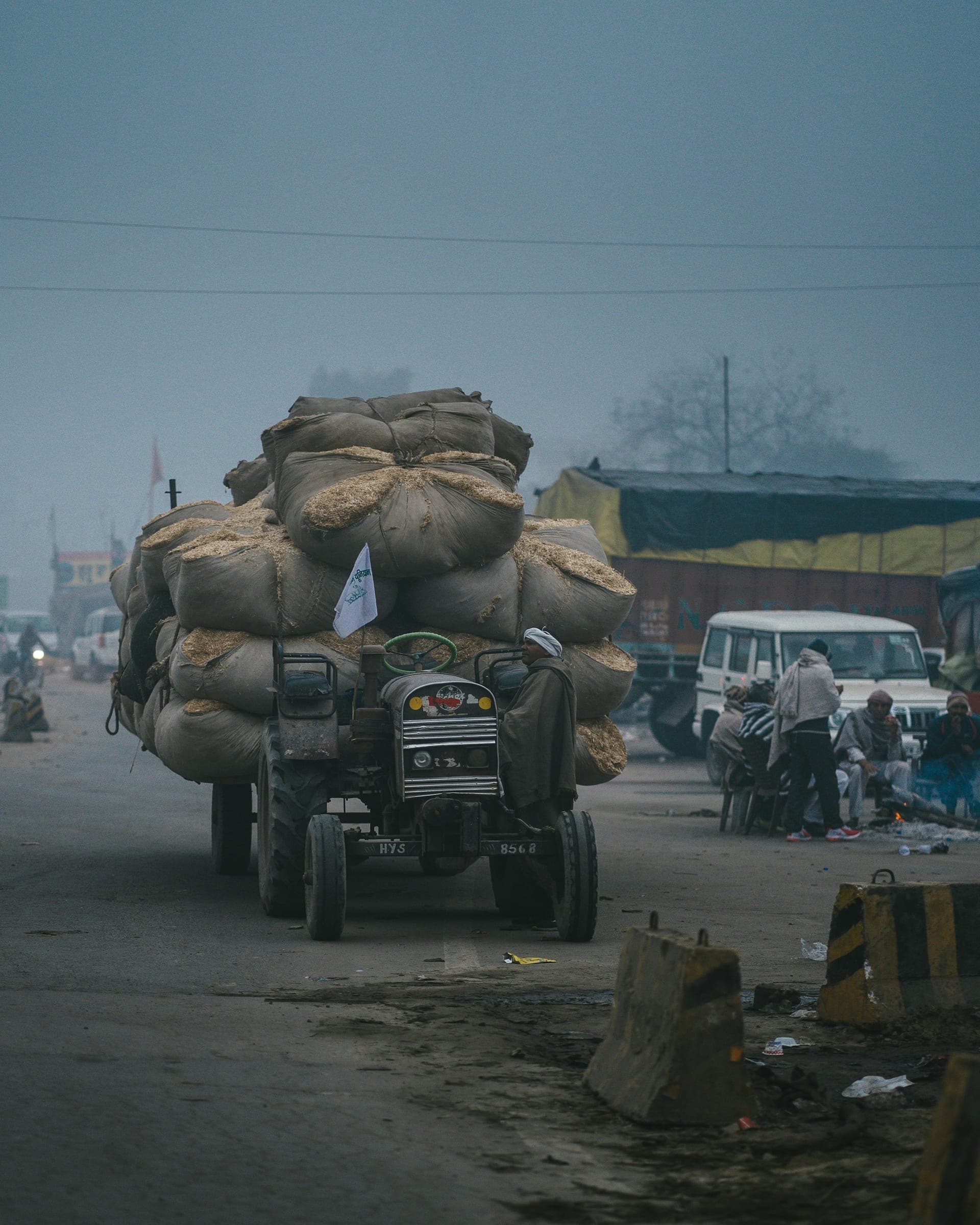
The truck is loaded before the settlement is awake. Sacks come up onto the bed in the dark, atta and rice and dal, tins of oil, counted against a manifest by torchlight, the Seva banner rolled and wedged behind the cab. This is the part no photograph shows, and it is most of the work: an hour of lifting before a single person has been helped.
By the time we pull out, the bed is stacked to the rails and the light is only just coming up grey. Nobody on the truck is talking much. The morning has already started; it just hasn't reached anyone yet.
We drive to the settlement rather than ask anyone to come to a centre, and the reason is plain. A weekday morning is a working morning. Around 90% of India's workers are informal, with no contract and no paid leave (WIEGO), so the household we are looking for is the one that loses a day's pay the moment it stops working. Ask that family to travel across the city and queue at a distribution point, and you have handed them a ration kit at the cost of the wage the kit was meant to protect.
So the truck goes to them. It is slower, it burns more diesel, and it is the only version of the drive that reaches the people it is actually for. Running it any other way would quietly select for the households that needed it least.
of India's workers are in informal employment, with no contract or paid leave
Source · WIEGO Statistical Brief (drawing on NSS / PLFS)
A weekday morning is a working morning, and a working family cannot spend it queuing across the city for the very wage the kit was meant to protect.
At the settlement the first thing that happens is a list gets checked. It is built ahead of the drive with people who know the lanes: who lives where, which households have how many mouths. Families come with kit slips. We call names, tick the sheet, and the queue forms itself along the side of the truck.
Hundreds of families come through on a typical morning. We do not means-test at the truck. The list did that work earlier, imperfectly and in advance, so the morning itself can move instead of stalling into an argument at the tailgate.
Then it is just labour. Volunteers work the sacks down off the bed two at a time, pass them along a short chain, set them into arms. The action frames catch this exactly: a woman at the front already cradling her sack while, a few feet behind her, the bed is still being unloaded. Both are the same moment. The handover at the front only exists because of the line of people sweating at the back.
It is unglamorous and repetitive and it goes on for as long as the list runs. Nobody frames the stacking, or the counting, or the walk back to the truck for the next two sacks. None of it looks like the poster, and all of it is the drive.
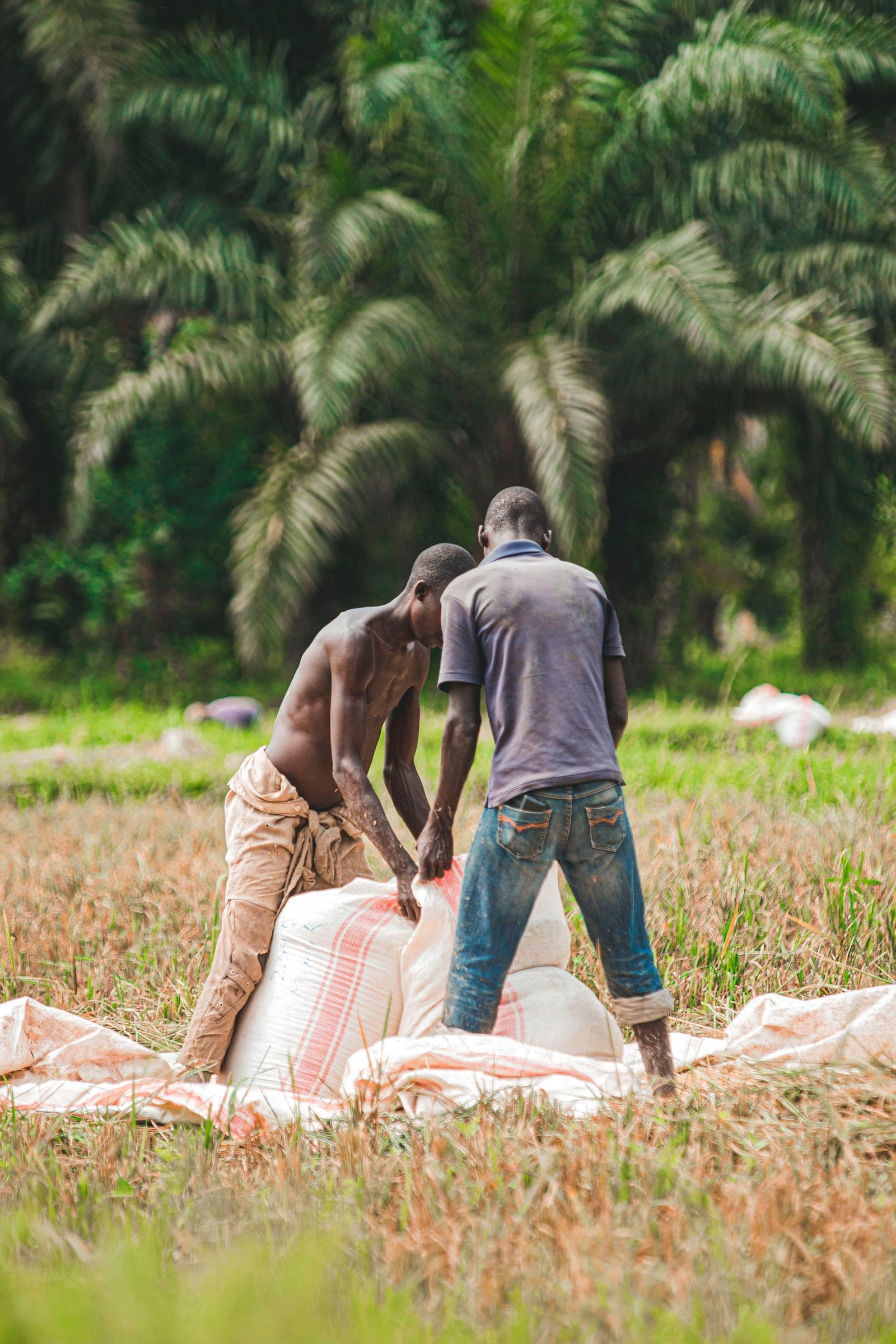
A word on what is actually in the sack, because it is often misunderstood. Project Seva hands over dry rations: rice or wheat flour, whichever the kitchen there runs on, with dal and oil, and salt and sugar where a household needs them. It is not a cooked meal. Nobody is served food to eat on the spot. What a family carries home is a month of staples, to cook themselves, on their own stove, when they choose.
In the frame of three women with their kits you can see the dal and the oil sitting in the mouths of the sacks. That is what a kit is: things a family keeps and cooks down over weeks.
The photographs everyone sees are the golden-hour ones: the handover, the sack held to the chest, the straight look down the lens. They are true. They are also about two minutes out of a morning that started in the dark and ended with an empty truck bed and a folded banner.
That is the whole of it, and we would rather say so plainly than dress it up. To date the drives have moved 65+ tonnes of food grains this way, to 6,500+ families (Pledge A Smile Foundation records, confirmed September 2026), one sack at a time, off one truck bed at a time, into the arms of families who were home on a working morning for the simple reason that we brought it to where they already were.
food grains distributed through Project Seva to date
Source · Pledge A Smile Foundation records, confirmed September 2026
- 1WIEGO Statistical Brief, India (Raveendran & Vanek), drawing on NSS / PLFS and ILO definitions Link
- 2Pledge A Smile Foundation records, confirmed September 2026: Project Seva kit contents, and 65+ tonnes of food grains to 6,500+ families to date
The numbers are real.
So is the need.