
 SEVA ▪ 2026
In 2022, 55.6% of Indians (about 790 million people) could not afford a healthy diet (FAO SOFI 2024). The striking part is why. A healthy diet in India costs about 3.07 PPP dollars a person a day, among the lowest in the region (FAO CoAHD indicators, 2024). The food is cheap. The income to buy it isn't.
of Indians could not afford a healthy diet in 2022 (about 790 million people)
Source · FAO SOFI 2024
Around 90% of India's workers are informal: no written contract, no paid leave (WIEGO, drawing on NSS/PLFS). A single missed workday, and the household's income stops without warning.
Close to home, in a South Delhi resettlement colony of the kind the org serves, one study found 77.2% of households food-insecure on an average income of ₹9,784 a month (Agarwal et al., 2014: a single-colony study, illustrative of the neighbourhood, not a Delhi-wide rate).
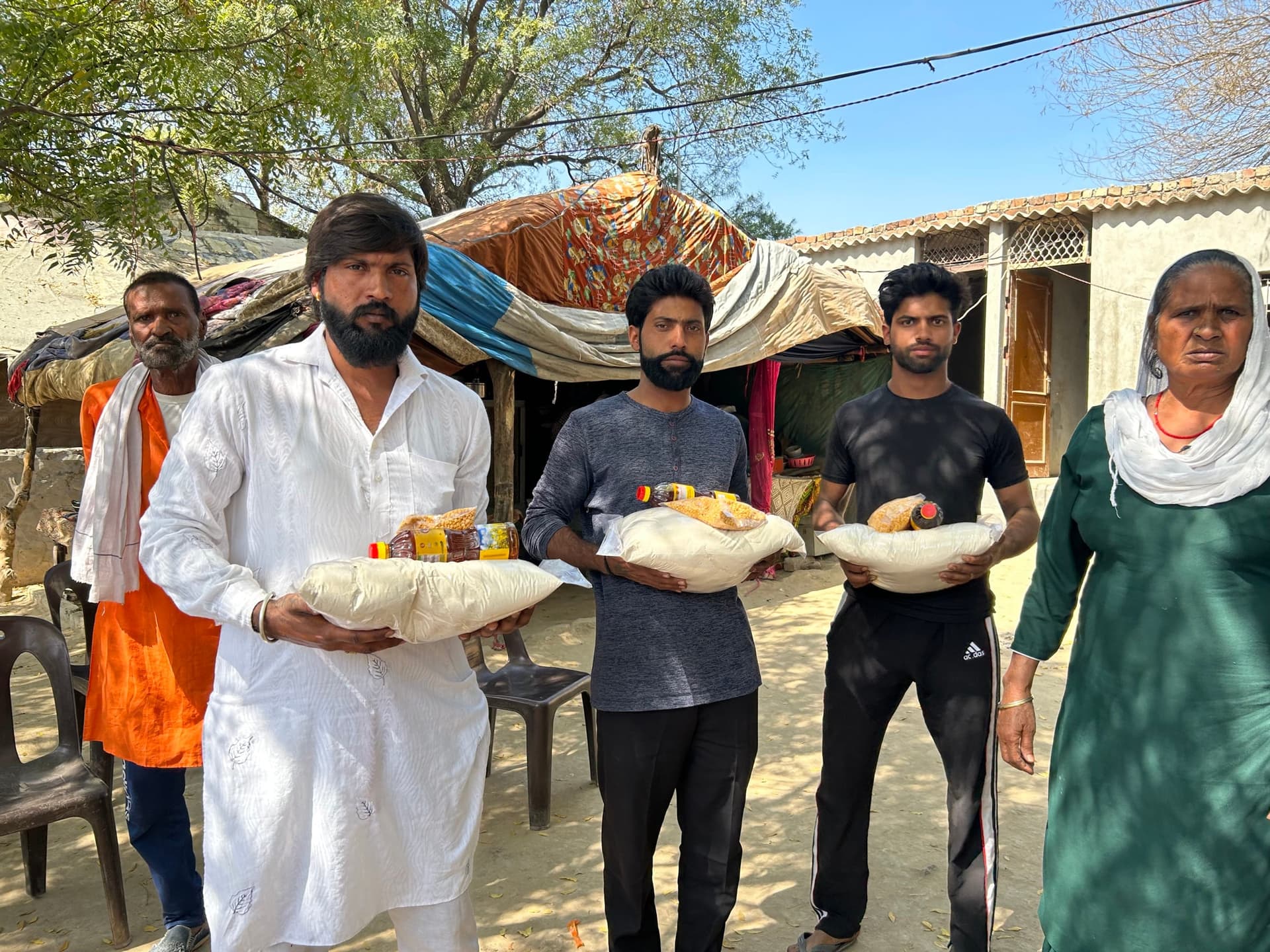
Project Seva delivers essential food grains (rice or wheat flour, dal and oil, with salt and sugar where a household needs them) to daily-wage workers, migrant families and the urban poor. Those are the base of a North Indian kitchen: atta for roti, rice, dal for protein, oil to cook it in.
Which grain goes in follows the kitchen rather than the other way round. In some settlements that means rice; in others, wheat flour. Dal and cooking oil are in every kit.
Across the drives, Project Seva has moved 65+ tonnes of food grains and reached 6,500+ families (Pledge A Smile Foundation records, confirmed September 2026). What the kit does is absorb one month's food shock, so a bad week doesn't become a skipped dinner.
food grains distributed through Project Seva to date
Source · Pledge A Smile Foundation records, confirmed September 2026
We don't means-test at the truck. We work off lists built with people who know the settlement. It isn't a perfect system; it gets food to the households that need it, on the day, and it's honest about being exactly that.
The numbers are real.
So is the need.