 IMPACT ▪ 2022
As of NFHS-5 (2019–21), 78% of young women aged 15–24 in India used a hygienic method of menstrual protection. Read it the other way: 50% still used cloth, and only 64% used sanitary napkins (NFHS-5, IIPS / Ministry of Health and Family Welfare). Half. That's the honest headline, and it doesn't need inflating.
of young women aged 15–24 still use cloth for menstrual protection
Source · NFHS-5, 2019–21
Access isn't random. 95% of young women in the richest fifth of households used hygienic methods, against 54% in the poorest fifth, and the poorest women were 3.3 times more likely to rely on cloth (NFHS-5, 2019–21). The gap in access tracks household wealth almost exactly.
It tracks schooling the same way: 90% of women with 12+ years of education used hygienic methods, versus 44% of women with no schooling (NFHS-5, 2019–21). And geography: 90% of urban women against 73% rural, from about 95% in Kerala down to about 59% in Bihar (NFHS-5, 2019–21).
hygienic-method use, richest fifth vs poorest fifth of households
Source · NFHS-5, 2019–21
The easy story is: hand out pads, problem solved. The evidence is harder. In one study of adolescent girls in urban slums, 82% used sanitary pads and yet 37.5% still missed school during their period (peer-reviewed urban-slum study). What's missing isn't only the product. It's toilets, water, privacy and the stigma that keeps the whole subject unspoken.
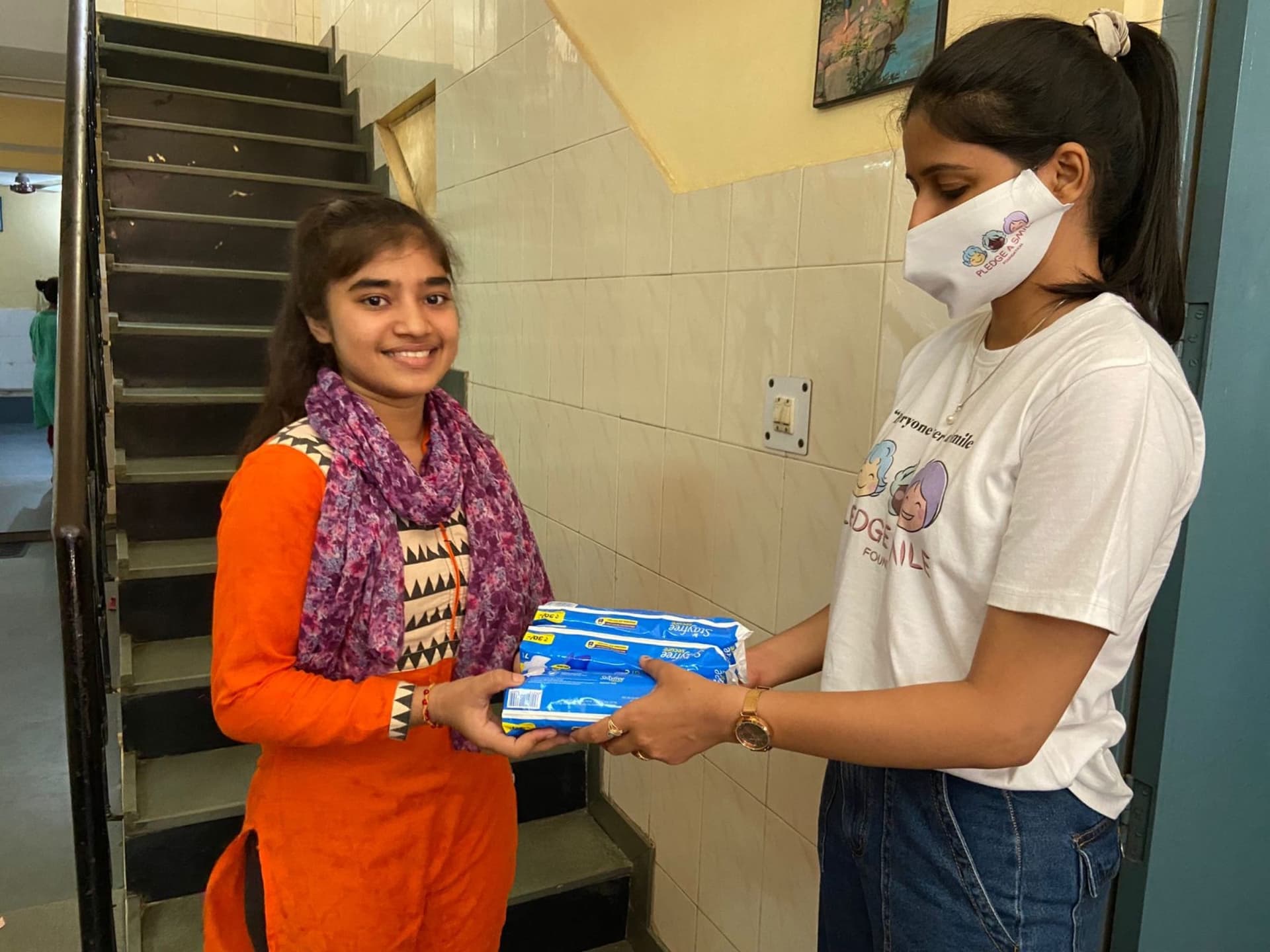
Project Noori was the org's menstrual-health initiative. It ran from 2020 to 2023 across Delhi-NCR, handing out hygiene and menstrual kits and reaching 2,000+ girls (Pledge A Smile Foundation records, confirmed September 2026). It worked in the low-income communities where the NFHS numbers bite hardest, which is why it went beyond handing out a product.
Noori is a past initiative now, but the picture it addressed hasn't moved much: half of India's young women still reach for cloth, and which half depends almost entirely on how much money and schooling a household has. That's a solvable gap. It just isn't solved by pads alone.
The numbers are real.
So is the need.