
How to Build a Career in India's Social Sector
Looking for an internship? Apply to Pledge A Smile FoundationShort answer
Build a social-sector career in India in order: pick one of five functions, then produce one documented work sample in it. No statute reserves general development work for a degree or licence. The exception is rehabilitation, where Section 13(2) of the Rehabilitation Council of India Act, 1992 bars anyone from practising without enrolment on the Central Rehabilitation Register.
- Updated
- 11 September 2026
- Sources checked
- 11 September 2026
- Read
- 10 min
- Sources
- 13
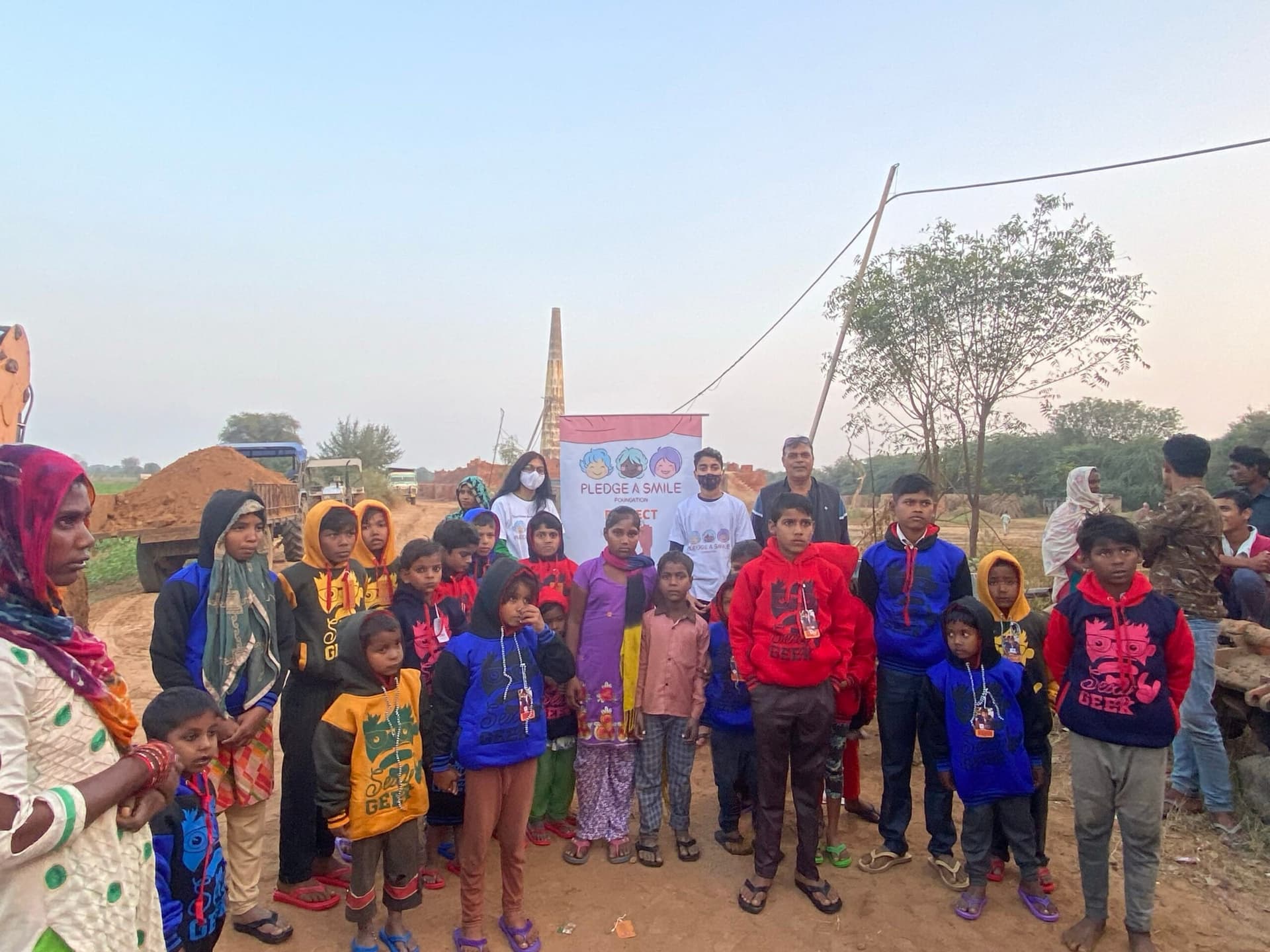
Step one: how do you start a career in India's social sector?
Start by picking one of five functions and naming it on the application. Junior posts in this sector are often written and read by the same person, the one who runs that function, so an application offering general interest in social work gives that reader nothing to assess. The table sorts the five functions that carry most of the paid work.
Read it by function rather than by job title. A Programme Associate at one organisation and a Project Coordinator at another can be doing identical work, and a two-person team hands fundraising and communications to one person. No regulator publishes this classification. It is a way of reading advertisements, not a statutory taxonomy.
| Function | Usual titles | What the application must show |
|---|---|---|
| Programme delivery | Programme Associate, Field Coordinator, Teaching Fellow | Field exposure, the local language, willingness to be posted where the programme runs |
| Fundraising and partnerships | Fundraising Associate, Partnerships Executive, Grants Officer | Plain writing, spreadsheet discipline, evidence of holding a deadline |
| Monitoring and evaluation | Evaluation Associate, Research Associate | Statistics, one survey tool, sampling sense, patience with messy data |
| Communications | Communications Associate, Content Associate | A portfolio, interviewing skill, writing that works for donors and for the community |
| Policy and research | Research Associate, Policy Analyst, legislative fellow | A writing sample, a long-form piece, ease with government data |
The work behind each label: programme delivery runs the activity on the ground, meaning classes, health camps, training and relief. Fundraising and partnerships handles proposals, donor and corporate relationships, and reporting against grant conditions. Monitoring and evaluation sets indicators and runs baseline and endline surveys to test whether the programme moved anything. Communications covers case documentation, annual reports, campaign content, and photography and video from the field. Policy and research produces briefs, submissions to consultations, evidence reviews and legislative support.
Pay does not track the function as closely as students expect. What a role pays depends mostly on the funder sitting behind the post.
Step two: does the role sit in the sector's one licensed corner?
Only if it is a rehabilitation role. The Central Rehabilitation Register is this sector's single statutory gate. Section 13(2) of the Rehabilitation Council of India Act, 1992 confines practice as a rehabilitation professional, anywhere in India, to people holding a recognised rehabilitation qualification who are enrolled on that register. Nothing comparable stands between a graduate and any other first job here.
Section 2(n) of the Act names who is covered. Among the categories are audiologists and speech therapists, clinical psychologists, special teachers for children with disabilities, vocational counsellors, and the employment and placement officers who work with them. The Act is published by the Council itself, a statutory body since 1993, now under the Department of Empowerment of Persons with Disabilities.
Section 13(2A), inserted by the 2000 amendment, is the exception. A doctor or paramedic in physical medicine and rehabilitation, orthopaedics, ear, nose or throat, ophthalmology or psychiatry may discharge those functions without enrolment while employed in a hospital owned or controlled by the Central or a State Government. A body that is merely government-funded is covered only once the Central Government notifies it.
Contravention is punishable under Section 13(3) of the Rehabilitation Council of India Act, 1992 with imprisonment of up to one year, a fine of up to one thousand rupees, or both. So if you are heading for a rehabilitation or special education role, confirm before paying any fee that your course is approved. The Council lists its approved institutions for regular mode and distance mode beside a list of blacklisted institutions.
One caveat runs the other way: the licence attaches to the profession, not to the employer. A nonprofit hiring a doctor or a nurse is still hiring someone its own regulator registers. For physiotherapy and for legal work, whether registration bites turns on the state and on whether the job counts as clinical or courtroom practice at all.
Step three: can you get into the NGO sector without an MSW, and which degree changes your options?
Yes, everywhere outside rehabilitation and special education. No Indian statute makes a Master of Social Work (MSW) a condition of nonprofit employment. The register created by the 1992 Act reaches only the categories listed in its Section 2(n), and hiring everywhere else in the sector is employer discretion. What a master's changes is narrower than applicants expect: it supplies supervised field placement, and it makes you pick a specialisation that decides your track before you apply anywhere.
Take that second point literally. The Tata Institute of Social Sciences does not run one social work master's. Its list of teaching programmes carries separate MA Social Work specialisations running from Mental Health, Public Health and Counselling to Rural Development, Disability Studies and Action, Criminology and Justice, and Dalit and Tribal Studies and Action. Choosing the course is choosing the lane.
Management routes run in parallel and reach the same employers from the operations and finance side. The Institute of Rural Management Anand builds village fieldwork segments into its flagship programme, which its own site announced as MBA (Rural Management) when checked on 22 August 2026, while the programme listing still carries the older Post Graduate Diploma in Management (Rural Management) name, so ask which award your admission letter will name.
Field work hours are fixed by each university's own ordinance rather than by any national number, so read yours instead of a figure quoted online.
Step four: is a fellowship still open to you, or has an age cap closed it?
Check your date of birth before anything else. LAMP closes at 25 and the Gandhi Fellowship at 25, or 29 with a year of full-time work experience, while Teach For India's fellowship page states no eligibility criteria at all. All three are fixed-term, cohort-based, full-time placements, and none of their published eligibility pages asks for prior development sector experience, which makes them a predictable door for a graduate with no field record.
- Teach For India: two years as a full-time teacher in an English-medium government or affordable private school in one of nine cities, in a grade 1 to 10 classroom of 40 to 80 students, beginning with a residential training institute. Its fellowship page sets out no eligibility criteria, age included, so that has to be checked on the application portal rather than assumed.
- The Gandhi Fellowship, run by the Piramal Foundation: 23 months, residential. Its stated age limit is 25, extended to 29 for candidates with at least one year of full-time work experience.
- The Legislative Assistants to Members of Parliament (LAMP) Fellowship at PRS Legislative Research: one parliamentary year, from the Monsoon session to the close of the Budget session, working with an assigned Member of Parliament on questions, speeches and private members' bills. Eligibility is a bachelor's degree in any discipline, Indian citizenship, and an age of 25 or below.
These three are examples rather than the whole field. Each recruits in dated annual cohorts rather than continuously: PRS lists LAMP intakes by parliamentary year, 2026-27 being the current one. Opening and closing dates sit on a programme's own apply page rather than on its eligibility page, so a missed window costs a year.
Stipends differ and are rarely on the landing page. The Gandhi Fellowship's frequently asked questions page states a stipend of ₹24,500 a month inclusive of all expenses, of which ₹7,000 a month is retained as a security amount and paid as a lump sum on completing the 23 months. LAMP's eligibility page names no stipend, so ask before you apply.
Step five: what documented work will you show?
One artefact a hiring manager can assess without your help: a cleaned survey dataset, a drafted donor report, three case studies written from field interviews. Junior hiring here appears to run on evidence of usefulness plus a named person who will vouch for it.
No body publishes recruitment data for the sector, so treat that as a reading of how these posts are written and what referees they ask for, not a measured finding. An internship, or a sustained volunteering commitment, is the usual way to produce both.
- Pick one of the five functions and stop applying to the other four. Undirected applications read as undirected.
- Come away with a work product rather than a certificate. A work product can be assessed; a certificate cannot.
- Ask for a letter naming your duties, your dates and your supervisor, rather than a template calling you sincere and hardworking. Read how a nonprofit internship differs from a corporate one before you start.
- Read the employer's annual report and whatever it publishes about results before the interview, then ask something that could only come from having read it.
- Apply to associate-level roles in the same issue area, where your one artefact is directly relevant instead of merely admirable.
Step six: where are the openings advertised?
Four places. The careers page of the organisation you already want to work for; a sector job board such as DevNetJobsIndia, which carries NGO, United Nations and corporate social responsibility vacancies; the state portals that advertise scheme-funded government posts; and the government's own National Career Service portal, run by the Ministry of Labour and Employment, which states that registration, applying and interview processing carry no fee at any stage.
The third channel is the one students miss, because nothing aggregates it. Centrally sponsored schemes are staffed by the states that run them, so their posts appear on state department and district portals rather than on any national board. The National Health Mission, under the Ministry of Health and Family Welfare, works this way: its Assam recruitment page alone routes applicants to separate portals for the state mission, the Medical and Health Recruitment Board, the Directorate of Medical Education and the Health and Family Welfare Department. For what scheme posts and nonprofit posts pay, see what an NGO job pays in India.
Part of a commercial board's listings sits behind a paid membership, and the free tier is normally enough to see who is hiring for what. Much junior hiring reaches none of these channels: it is continuous and often settled by a supervisor who has already seen someone's work, which is what a documented work product and a named supervisor buy you.
Before applying to an organisation you do not know, work through how to verify that an NGO is genuine. When an offer arrives, read how to verify an internship offer letter before you sign it or move city for it.
Step seven: what does a social sector career in India look like after five years?
Associate for one to two years, then coordinator or officer holding a budget line and a small team, then manager of a programme or a geography. Nothing standardises this. The sector has no common grade structure, so a two-person team can hand a 24-year-old a district while a large organisation moves in slower steps.
The lateral moves matter more than the ladder. Section 135 of the Companies Act, 2013 obliges qualifying companies to spend at least two per cent of their average net profits of the three immediately preceding financial years on corporate social responsibility, and Schedule VII fixes twelve permitted heads of spending.
Two consequences reach you. Those companies build in-house teams that hire people with field experience to manage implementation partners, and an issue area that fits a Schedule VII head has more funded work to staff than one outside it. Which companies are caught, and what the money may fund, is set out in the guide to how Indian NGOs are funded. No official count of junior vacancies by issue area exists, so treat any ranking of them as a tendency rather than a measured fact.
Government runs its own evaluation machinery and recruits into it. The Development Monitoring and Evaluation Office, formed in September 2015 by merging the Programme Evaluation Office with the Independent Evaluation Office and attached to the National Institution for Transforming India (NITI Aayog), publishes evaluation studies and toolkits. Philanthropies, multilateral agencies, research firms and consulting practices draw from the same pool.
Where should you start, and what is irreversible?
Start with the fellowship applications if you are 25 or under and still studying, because their age caps are the one irreversible thing on this page. Everyone else starts by choosing a single function and building the one documented piece of work that proves they can do it.
- Fluent in a regional language and willing to live outside a metro: field and programme roles are the shortest way in, and that combination is genuinely scarce.
- Certain about the issue but not about the function: spend six months working on it before committing two years and a fee to a master's.
- Set on disability or special education: enrolment on the Central Rehabilitation Register comes before everything, since an approved qualification is not optional there.
The asymmetry is worth sitting with. A fellowship application is made in your final year of college or not at all. The rest is still open at 30, at 40, and after a decade spent in another industry.
- 1No Indian statute reserves general development work for a particular degree or licence, and no register governs entry to programme, fundraising, evaluation, communications or policy roles.
- 2Rehabilitation is the licensed exception: Section 13(2) of the Rehabilitation Council of India Act, 1992 bars unregistered practice, and Section 13(3) allows imprisonment of up to one year, a fine of up to one thousand rupees, or both.
- 3Fellowship age caps decide the timing. The LAMP Fellowship at PRS Legislative Research takes candidates aged 25 or below, and the Gandhi Fellowship stops at 25, extending to 29 only with a year of full-time work experience.
- 4Junior hiring appears to turn on one assessable work product and a named supervisor who will vouch for it rather than on a certificate of completion; no body publishes recruitment data for the sector, so that is a reading of how the posts are written, not a measured finding.
- 5Openings surface in four channels: an organisation's own careers page; a sector job board such as DevNetJobsIndia; state department and district portals, which carry the scheme-funded government posts that no national board aggregates, as the National Health Mission Assam recruitment page shows by routing applicants to four separate state portals; and the government's National Career Service portal, which charges jobseekers nothing at any stage.
Can an engineering or commerce graduate get a development sector job?
Yes. What substitutes for sector experience is one documented artefact: a thesis built on field data, a corporate social responsibility capstone project, or a cleaned dataset from a course assignment. The way these junior posts are written suggests interviewers weigh demonstrated aptitude over the degree name on the transcript, though no recruitment data is published for the sector to confirm it, so lead with the artefact rather than the discipline you studied.
Does a low degree percentage or a gap after graduation shut these doors?
For fellowships it can; for jobs it rarely does. The Gandhi Fellowship's frequently asked questions page requires a minimum 55 per cent cumulative score across class 10, class 12, graduation and post-graduation, so a marksheet under that closes that door whatever else you bring. LAMP's eligibility page sets no marks bar at all. Neither page mentions a gap after graduation, and an interviewer's question about one is answered by what you did in it: documented work, paid or unpaid, in the function you are applying to.
Is a distance-mode social work or special education course accepted?
It depends on what regulates the role. For general nonprofit work nothing bars a distance qualification, and employers judge the field placement behind it. For rehabilitation and special education roles governed by the Rehabilitation Council of India Act, 1992, what matters is whether the Council has approved that specific course at that institution, in the mode you are enrolling in. An institution on the approved list does not make every course it runs a recognised rehabilitation qualification.
Can someone switch into the social sector from a corporate job in India?
Yes. The barrier of having no documented work is aimed at graduates with no track record, which a mid-career professional already has. What changes is translating that record: a finance hire documents audit or compliance work for a nonprofit finance team, a marketer produces one campaign for a cause, then applies for an associate or manager role in the matching function. Fellowship age caps do not apply outside fellowships, so a mid-career move has no fixed cutoff.
What should you ask an organisation before accepting a first role?
Ask who will supervise you and how often, which output you will own by the end, whether the position is funded by a grant with a fixed end date, and what documentation you receive when you leave. The grant question matters most: many junior positions sit inside a project budget, and the honest answer tells you how long the role is funded to exist.
Is an internship abroad or with a multilateral agency necessary early on?
No. The way entry-level posts here are advertised suggests demonstrated field or analytical work counts for more than the brand of the host, though nobody publishes hiring data that would settle it. On that reading, a documented six-month engagement with a small organisation, with a named supervisor and a visible work product, does more for an application than a short unstructured stint at a large one. International experience becomes useful later, mostly at the research and policy end.
Every rule above links to the document that states it. The full list, with the date each was last opened:
- 1Companies Act, 2013, Section 135(5), India Code (Legislative Department, Ministry of Law and Justice)indiacode.gov.in · checked 11 September 2026
- 2Rehabilitation Council of India Act, 1992, Section 13, published by the Rehabilitation Council of Indiarehabcouncil.nic.in · checked 22 August 2026
- 3Rehabilitation Council of India, official websiterehabcouncil.nic.in · checked 22 August 2026
- 4Tata Institute of Social Sciences, Teaching Programmestiss.ac.in · checked 22 August 2026
- 5Institute of Rural Management Anand, official websiteirma.ac.in · checked 22 August 2026
- 6Teach For India, The Fellowshipteachforindia.org · checked 22 August 2026
- 7Gandhi Fellowship, Frequently Asked Questions (Piramal Foundation)gandhifellowship.org · checked 22 August 2026
- 8PRS Legislative Research, About the LAMP Fellowshipprsindia.org · checked 22 August 2026
- 9PRS Legislative Research, LAMP Fellowship Eligibilityprsindia.org · checked 22 August 2026
- 10DevNetJobsIndiadevnetjobsindia.org · checked 22 August 2026
- 11National Career Service, Ministry of Labour and Employmentncs.gov.in · checked 22 August 2026
- 12Development Monitoring and Evaluation Office, NITI Aayogdmeo.gov.in · checked 22 August 2026
- 13National Health Mission, Assam, Recruitment; National Health Mission, Ministry of Health and Family Welfarenhm.assam.gov.in · checked 22 August 2026
Pledge A Smile Foundation takes interns from anywhere in India.
A registered Section 8 non-profit. The programme is remote, open to students with no prior experience, and free to apply to.
See the internship and how to applyMore from ngo sector & careers
 NGO sector & careersHow Indian NGOs Are Funded: CSR, 80G, Grants, FCRADonations, CSR, government grants and foreign contributions are governed by four different laws, and each one dictates who may give and what the money may buy. Each source forces a different filing into existence, and those filings are what settle where a specific NGO's money actually comes from.12 min read · 22 sourced claims
 NGO sector & careersDoes an NGO Job in India Pay Well? What the Rate Cards ShowThree central government schemes publish exactly what they will fund an NGO post at, from ₹6,250 to ₹60,000 a month. Those schedules, the grant calendar behind them and the FCRA cap on administrative spending explain most of the pay gap between one NGO and the next.14 min read · 24 sourced claimsNGO sector & careersHow to Check If an NGO in India Is Genuine: Four RecordsA four-record verification pass for any Indian NGO, built from what the NPO Darpan portal, a state Charity Commissioner's register and the national cybercrime portal actually publish. Includes what each record proves, what it cannot prove, and where to complain.13 min read · 27 sourced claims